FRP Grating for Wastewater Treatment Plant Guide

What Is FRP Grating in Wastewater Treatment Plants?
Industrial wastewater facilities operate under some of the most aggressive conditions on the planet. Traditional steel infrastructure consistently fails due to caustic chemicals, organic decay, and continuous humidity.
FRP grating for wastewater treatment plant applications provides a permanent, high-performance structural solution. It is a composite flooring system designed to maintain structural integrity where conventional metals rapidly deteriorate.
Understanding Fiberglass Reinforced Polymer (FRP) Grating
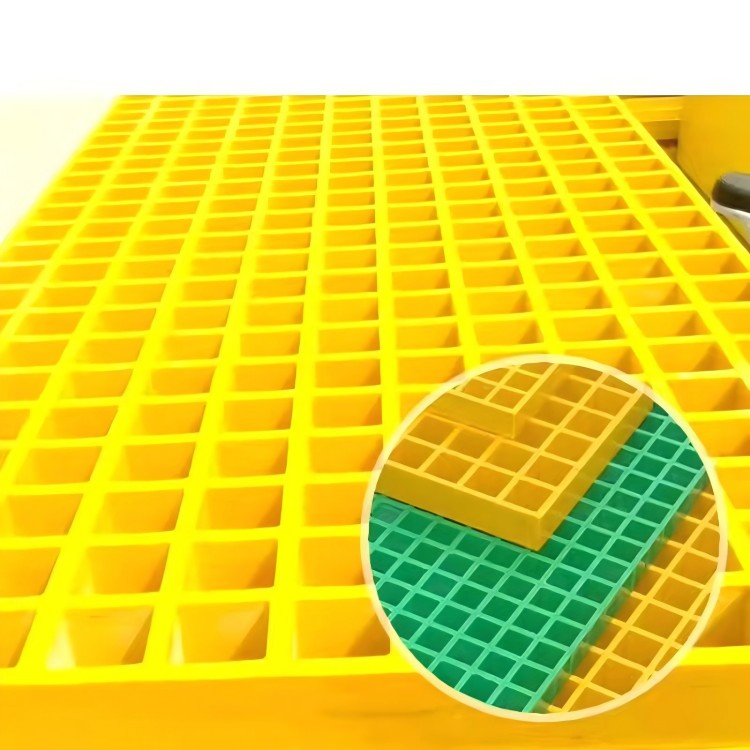
Fiberglass Reinforced Polymer (FRP) grating is an advanced composite manufactured by combining continuous glass fiber roving with thermosetting liquid resins. This matrix creates a lightweight, load-bearing grid with exceptional physical resilience.
- Reinforcement Matrix: High-grade E-glass or E-CR glass fibers deliver tensile strength and impact absorption.
- Polymer Resin Bed: Specialized resins (isophthalic polyester, vinyl ester) lock fibers in place, sealing them against moisture and chemical attack.
- Surface Curing: Integrated grit finishes or concave profiles provide permanent traction without external coatings.
Unlike steel or aluminum, fiberglass grating does not rust, leach metal ions, conduct stray electrical currents, or require recurring anti-corrosion painting.
The Role of FRP Grating in Modern Water and Sewage Treatment
Municipal and industrial sewage processing plants rely on FRP grating to maintain uninterrupted operations and plant safety. Facilities cannot afford downtime or structural collapses caused by hidden under-floor rust.
- Combating Biogenic Sulfuric Acid: Microbial activity generates hydrogen sulfide ($H_2S$) gas, which converts to sulfuric acid. FRP completely resists this acid attack, which typically corrodes carbon steel in months.
- Worker Safety Across Wet Areas: Slime, condensation, and chemical residues make walkways hazardous. FRP surfaces provide reliable slip resistance even when fully submerged or coated in biological slick.
- Open-Air Aeration and Filtration: The open-grid geometry allows gas venting, unhindered water drainage, and light penetration into active basins.
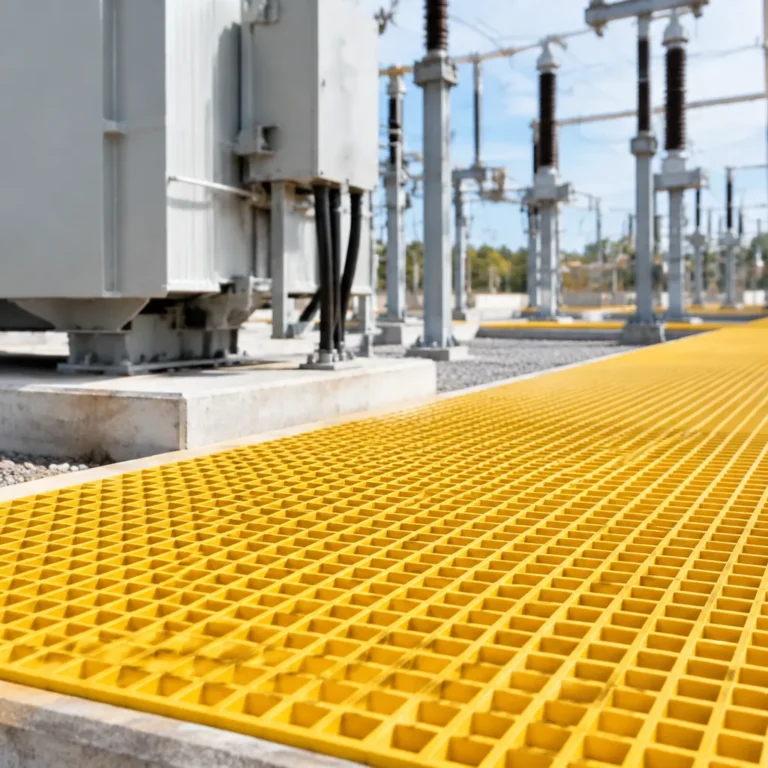
- Non-Conductive Isolation: High-voltage motors, pumps, and variable frequency drives (VFDs) require non-sparking, electrically isolated platforms to protect technicians.
Key Differences Between Molded and Pultruded FRP Gratings
Selecting the correct mesh depends strictly on load distribution, span distances, and installation flexibility. We manufacture and supply two distinct formats to match these facility demands.
FeatureMolded FRP GratingPultruded FRP GratingManufacturing MethodInterwoven glass fibers placed in a heated open moldContinuous glass strands pulled through heated steel diesGlass-to-Resin Ratio~35% Glass / 65% Resin~65% Glass / 35% ResinStrength ProfileBi-directional strength (equal load bearing both ways)Unidirectional strength (maximum load along the span bar)Corrosion ProtectionMaximum (thicker resin layer encloses fibers)High (requires resin-rich surface veils)Field FabricationCut anywhere without losing integrity; cutouts need no extra supportRequires structural planning for cross-cuts; ideal for long spansPrimary Plant UseSump covers, catwalks with complex piping cutouts, trench gridsLong-span walkways, elevated pipe bridge platforms, heavy wheel loads
Molded grating provides optimal versatility for tight footprints and multi-directional cuts around pipework. Pultruded grating delivers the stiffness and high load capacity required to bridge longer structural spans with minimal deflection.
Key Benefits of FRP Grating for Water and Wastewater Applications
Operating a sewage or industrial effluent facility means dealing with constant moisture, volatile chemicals, and continuous foot traffic. Traditional materials like carbon steel or aluminum fail rapidly in these settings. Installing high-performance FRP grating for wastewater treatment plant applications solves these structural headaches right out of the box, delivering decades of maintenance-free service.
Key FeatureTraditional Steel GratingIndustrial FRP GratingPrimary Plant BenefitChemical ResistanceRapid oxidation; rusts quicklyUnaffected by acids, bases, and H2SZero structural rot or thinningSlip ResistanceBecomes slick when wet or oilyIntegrated quartz grit surfaceDrastically fewer slip-and-fall injuriesWeightHeavy (requires hoists/cranes)About one-third the weight of steelFaster, safer two-man installationConductivityHigh electrical & thermal conductorNon-conductive and electrically safeSafer around wet pump motors & switchgearService Life3 to 7 years in severe zones20+ years with minimal careSignificantly lower life-cycle cost
Superior Corrosion Resistance in Harsh Chemical Environments
Wastewater plants produce severe concentrations of hydrogen sulfide ($H_2S$) gas, which converts into sulfuric acid along elevated catwalks and covers. Carbon steel and even galvanized metals corrode rapidly under these conditions. Our fiberglass grating uses premium thermoset resins that deliver unmatched chemical and corrosion resistance across broad pH levels. For heavy-duty chemical feed rooms, review our dedicated guide on FRP grating for chemical plants to match specific acid profiles with the right polymer system.
Slip-Resistant Safety Surfaces for Wet Walkways
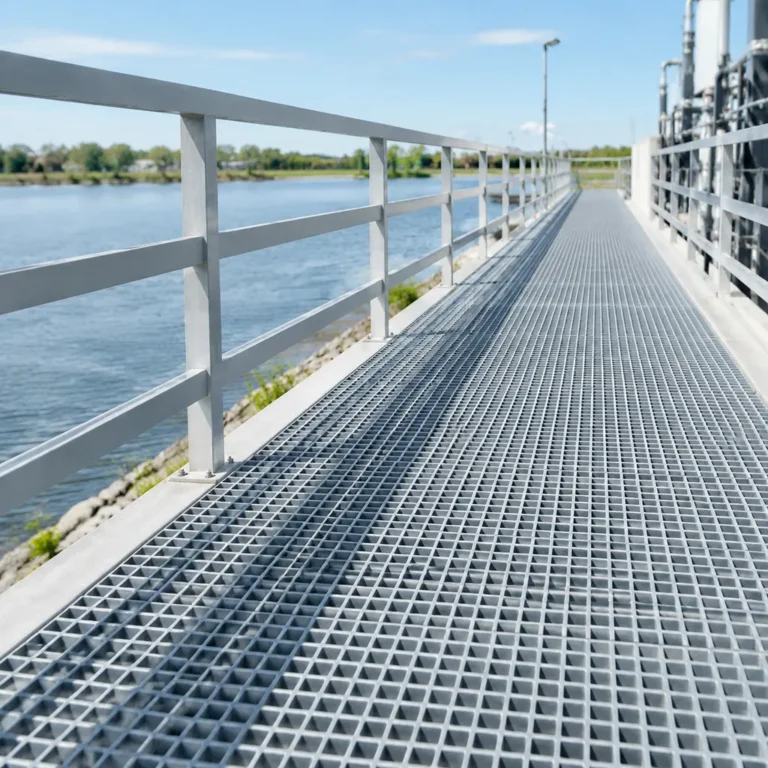
Sludge, moisture, grease, and biological growth make water plant walkways notoriously hazardous. We cast our molded grating with an aggressive, permanently bonded quartz grit top or a concave meniscus edge.
- Embedded Grit Surface: High traction even when fully submerged or covered in polymer lubricants.
- Bi-directional Grip: Provides multi-directional slip resistance regardless of approach angle.
- Worker Safety Compliance: Meets and exceeds international safety standards for industrial slip resistance.
High Strength-to-Weight Ratio and Easy Handling
Our fiberglass structures deliver impressive load capacities while weighing a fraction of cast iron or bar grating. This weight reduction simplifies every stage of the project:
- No Heavy Lifting Gear: Two technicians can easily lift, position, and install individual panels without cranes.
- Easy Field Adjustments: Crew members can cut panels to fit complex pipe runs and round tanks using standard hand tools and diamond-tipped blades.
- High Impact Recovery: Unlike metal, which bends permanently under impact, composite material flexes under momentary impact and returns to its original shape.
To discover how various resin formulations and profiles support specific point loads, check our comprehensive FRP grating guide covering structural industrial installations.
UV Protection and Extended Long-Term Durability
Outdoor clarifiers, settling tanks, and open digesters endure brutal ultraviolet radiation year-round. We formulate our exterior-grade composites with integrated UV inhibitors throughout the entire resin matrix, not just as a topical coat. This barrier stops resin chalking, structural embrittlement, and color degradation, ensuring your access infrastructure stays intact for decades under direct sunlight.
Types and Specifications of FRP Grating for Industrial Facilities
Selecting the right fiberglass grating setup depends directly on fluid flow, foot traffic, chemical exposure, and mechanical load demands. We manufacture our structural panels to meet strict plant engineering thresholds, matching aperture sizes and polymers to specific zone risks.
Open Mesh vs. Mini Mesh Molded Gratings
Mesh configurations determine both drainage capacity and pedestrian safety across wastewater walkways.
- Standard Open Mesh: Typically produced in a 38×38 mm (1.5″ x 1.5″) square pattern. It delivers balanced bi-directional strength and provides maximum drainage area for sludge, scum, and wastewater washdown.
- Mini Mesh: Features smaller top openings—commonly 19×19 mm (0.75″ x 0.75″). This dense grid prevents small tools, bolts, and debris from falling into clarifier tanks or machinery below. It also meets ADA guidelines and allows smoother rolling access for maintenance carts.
Choosing the proper FRP grating panels ensures adequate open area for process ventilation while keeping operators secure on elevated platforms.
High Load Capacity and Heavy-Duty Mesh Options
Standard molded grating easily handles routine maintenance crews. However, areas exposed to utility vehicles, forklifts, or heavy component staging require heavy-duty profiles. We engineer heavy-duty molded panels and high-strength pultruded grating using thicker bearing bars to eliminate deflection under intense point loads.
Grating ProfileStandard Thickness / DepthTypical Load CapabilityPrimary Plant ApplicationStandard Molded Open Mesh25 mm, 38 mm (1.0″, 1.5″)2.5 – 5.0 kN/m² UniformWalkways, cat-walks, aeration basinsMini Mesh Molded30 mm, 38 mm (1.2″, 1.5″)3.0 – 6.0 kN/m² UniformDewatering rooms, intake screen coversHeavy-Duty Molded / Pultruded50 mm – 60 mm (2.0″ – 2.5″)Up to H-20 Wheel LoadingHeavy truck loading bays, filter bed covers
When supporting wide spans, pairing panels with high-modulus FRP pultruded structural profiles guarantees structural integrity without the corrosion vulnerabilities of steel I-beams.
Resin System Selection (Isophthalic, Vinyl Ester, and NSF Certified)
The mechanical glass fiber delivers structural capacity, but the polymer matrix dictates chemical corrosion resistance. We formulate three primary industrial resin systems:
- Isophthalic Polyester (ISO Resin): The standard workhorse for municipal wastewater. It provides dependable defense against splash, spillages of mild acids, salts, sewage, and continuous moisture.
- Vinyl Ester (VE Resin): Formulated for aggressive chemical handling. This system withstands concentrated acids, caustics, sodium hypochlorite, and harsh oxidizers found in chemical dosing systems and odor control scrubbers.
- NSF Certified / Potable Water Formulations: Formulated specifically for water purification plants, contact basins, and treated water storage where materials must not leach chemicals or contaminants into the drinking water supply.
Primary Application Scenarios in Wastewater Treatment Facilities
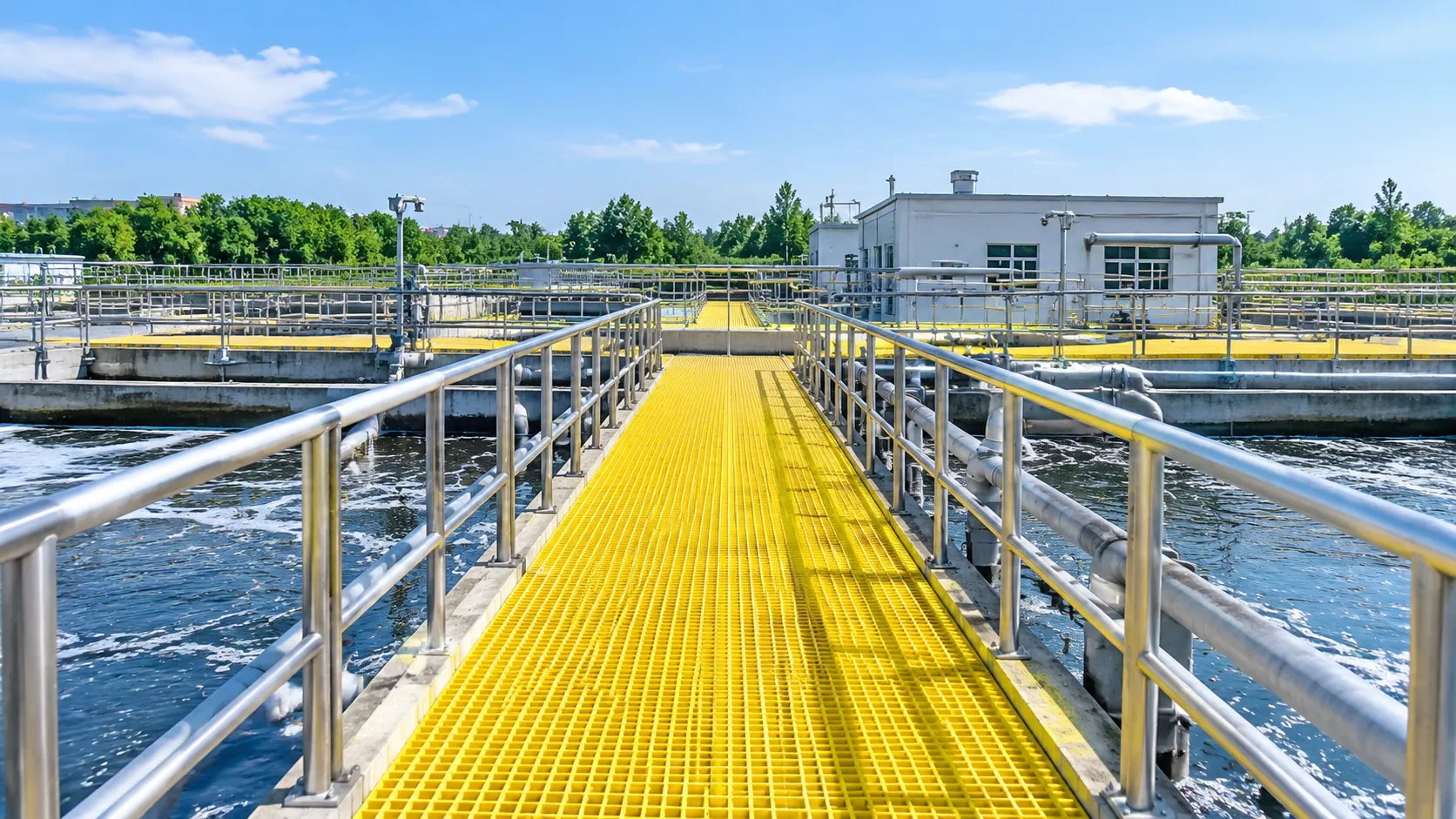
Modern municipal and industrial treatment plants run in wet, corrosive, and high-load environments 24/7. Standard metals fail quickly under these conditions. Installing high-performance FRP grating for wastewater treatment plant applications eliminates structural rot and protects workers in critical operational zones.
Walkways, Access Platforms, and Elevated Pipe Racks
Long spans, overhead clearances, and continuous foot traffic require lightweight structures with exceptional mechanical strength. We install molded and pultruded panels across access platforms and pipe bridges to slash dead weight on structural steel or fiberglass beams.
- Elevated Walkways: Continuous grit coatings provide traction for operators conducting regular valve inspections in wet weather.
- Pipe Bridges & Racks: Selecting pultruded grating profiles delivers the necessary unidirectional stiffness over broad spans without sagging.
- Ergonomics: Natural resilience underfoot reduces technician joint fatigue during long operational shifts.
Chemical Treatment and Dosing Zones
Chemical dosing rooms expose flooring to concentrated sodium hypochlorite, ferric chloride, sulfuric acid, and polymer feeds. Traditional metal grating rusts through in months, creating severe fall hazards.
Chemical ExposureProblem with SteelFRP Grating PerformanceFerric ChlorideRapid oxidation and pittingCompletely inert with vinyl ester resinsSodium HypochloriteSevere structural thinningHigh corrosion resistance across all pH swingsSulfuric AcidRapid acid attack and weld failureImpervious, monolithic matrix prevents flaking
Our solid-surface or open mesh fiberglass grating keeps dosing skid perimeters safe, clean, and structurally sound without surface re-coating.
Clarifier, Settling Tank, and Aeration Basin Surroundings
Clarifiers and secondary settling tanks subject surrounding catwalks to dense humidity, constant splash, and escaping hydrogen sulfide gas ($H_2S$).
- Aeration Basins: High moisture and bubbling turbulence deposit oily foam on platforms; our aggressive quartz grit anti-slip surface prevents slip-and-fall incidents.
- Clarifier Bridges: Lightweight panels eliminate excess torque on rotating bridge drives, significantly reducing motor wear.
- Bi-directional Strength: Square molded mesh configurations allow easy site-cutting around curved tank rims and agitator shafts without weakening structural capacity.
Trench Covers and Drainage Systems
Drainage trenches channel harsh effluent, sludge, and industrial runoff directly beneath primary traffic routes. We configure standard and custom FRP grating sizes to fit drainage troughs throughout dewatering buildings and grit collection chambers.
- Mini Mesh Options: Prevent dropped tools and small debris from clogging return sludge troughs while remaining ADA-compliant.
- Solid Top Covers: Trap foul odors and volatile organic compounds ($VOCs$) in septic intake trenches while supporting pedestrian and light cart transit.
- Effortless Access: Panels lift out without heavy mechanical cranes, giving maintenance crews rapid access to pumps and submerged flow meters.
FRP Grating vs. Traditional Steel Grating in Wastewater Plants
When we design and outfit water treatment infrastructure, the structural flooring must handle constant moisture, biocides, and corrosive gases. Traditional galvanized carbon steel and stainless steel have long served as defaults, but aggressive oxidation makes them a liability. Specifying industrial-grade FRP grating for wastewater treatment plant applications eliminates structural failure points, simplifies installations, and slashes recurring operational overhead.
Corrosion and Lifespan Comparison
Wastewater environments generate high concentrations of hydrogen sulfide ($H_2S$), sulfur dioxide, and chlorine vapors.
- Galvanized Steel: Protective zinc coatings sacrifice themselves rapidly under chemical attack. Once moisture reaches the base carbon steel, rust spreads beneath the surface, degrading structural load points within 3 to 7 years.
- FRP Grating: Our molded and pultruded composite structures are completely non-metallic. The chemically inert resin fully encapsulates the glass fibers, creating total resistance to acids, alkalis, and salts. Even in raw sewage pits, FRP consistently delivers a continuous service lifespan exceeding 25 to 30 years without chemical deterioration.
For a full technical breakdown of performance metrics, explore our guide on FRP grating vs steel grating load, weight, cost, and corrosion.
Performance FactorGalvanized Carbon SteelIndustrial FRP GratingAverage Lifespan in Sewage Facilities3 – 8 Years25+ YearsChemical ResistanceLow to Moderate (Requires coatings)Superior (Immune to $H_2S$ & moisture)Material WeightHigh (~3x heavier than FRP)Ultra-lightweight (Easy manual handling)Electrical ConductivityHighly ConductiveFully Non-Conductive (Dielectric)Slip Hazard (Wet/Algae)High Risk (Smooth bars)Near Zero (Embedded silica grit surface)On-Site ModificationRequires torch cutting & hot permitsStandard handheld diamond-blade saw
Initial Material Costs vs. Total Cost of Ownership
Carbon steel often carries a marginally lower upfront purchase price than premium composite grating. However, calculating true plant ROI requires assessing the total cost of ownership (TCO):
- Freight & Handling: FRP weighs roughly one-third of equivalent steel panels. We ship more square footage per freight load, and crews can carry panels by hand without relying on heavy mobile cranes.
- Field Fabrication: Steel requires specialized hot-work permits, certified welders, and secondary edge galvanizing when trimming around piping. FRP cuts cleanly with handheld saws and bonds instantly with sealing resin.
- Lifecycle Savings: Factoring in the zero-repaint cycle, eliminated downtime, and 20+ years of maintenance-free usage, composite systems break even against steel within 24 to 36 months of installation.
Maintenance Requirements and Structural Safety
Facility uptime and worker safety dictate plant floor management. Steel structures degrade unpredictably in wet clarifier and aeration zones, leading to severe hazards:
- No Structural Spalling or Weakening: Steel rusts from the inside out, often disguising load failure until a bar snaps under load. FRP maintains uniform deflection strength throughout its entire design life.
- Integrated Slip Resistance: Steel serrations wear dull over time and turn treacherous under biological sludge. Our molded panels feature permanent quartz grit embedded directly into the top resin matrix, providing an aggressive anti-slip surface even during chemical washdowns.
- Electrical & Thermal Insulation: High-voltage pumps and motor control centers (MCCs) introduce electrical hazard risks. Because fiberglass is completely non-conductive and spark-resistant, it protects personnel from stray ground currents and explosive methane gas ignition across all basin perimeters.
Selection and Purchasing Guide for Plant Operators
Selecting the right FRP grating requires balancing structural integrity with the specific environmental demands of your wastewater treatment site. Making an informed choice ensures long-term performance and operator safety.
Determining Load Capacity and Span Requirements
Before purchasing, evaluate the distance between support beams. Proper span length is critical to preventing deflection and ensuring worker safety. When designing your infrastructure, you may need to refer to FRP I-beams sizes, span capability, and structural selection to ensure your support grid matches the grating’s load rating.
Load RequirementRecommended Grating TypeSpan CapabilityPedestrian Traffic25mm – 38mm MoldedUp to 1200mmLight Equipment38mm – 50mm MoldedUp to 1500mmHeavy-Duty VehiclesPultruded GratingConsult Engineering Specs
Choosing the Right Resin and Surface Grit Finish
Resin selection dictates how well the grating withstands chemical exposure. For most wastewater facilities, Isophthalic resin provides standard corrosion resistance, while Vinyl Ester is essential for zones with high chemical concentrations.
- Standard Surface: Ideal for dry walkways.
- Meniscus/Concave: Provides basic traction for wet areas.
- Embedded Grit: Essential for maximum slip resistance in high-traffic, slippery zones near tanks or clarifiers.
Customization, Color Coding, and Structural Accessories
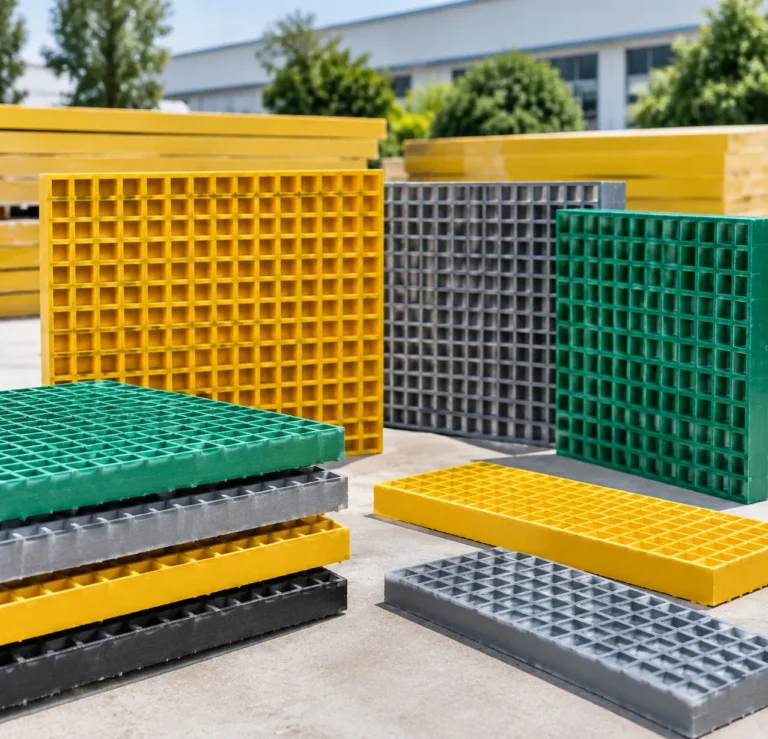
Modern treatment plants benefit from standardized color coding to denote safe walking zones or restricted access areas. Most manufacturers offer custom cutting to reduce on-site waste and ensure a perfect fit for complex geometries around aeration basins.
Always secure your grating using specialized 316-grade stainless steel clips or heavy-duty hold-down fasteners. Proper accessories ensure the grating remains firmly in place under vibration or heavy use, maintaining the integrity of your FRP I-beams for structural support throughout the plant. Planning these small details during the procurement phase significantly lowers future maintenance downtime.
Installation and Maintenance Best Practices for FRP Grating
Installing and maintaining FRP grating for wastewater treatment plant applications requires precise methods to guarantee structural integrity, worker safety, and long service life. While composite materials simplify handling compared to structural steel, following standardized installation techniques prevents premature wear around basins, clarifiers, and chemical injection skids.
Proper Cutting, Sealing, and Fastener Installation
Getting the right fit on-site requires the right tools and sealing procedures. When our field crews install fiberglass grating around tanks and pump mounts, we adhere to strict cutting and fixing standards:
- Cutting Tools: Use a circular saw or angle grinder fitted with a masonry, diamond, or carbide-tipped blade. Never force the cut; let the tool speed do the work to prevent delamination along the cut edges.
- Resin Edge Sealing: All raw, exposed cuts must be immediately sealed with a compatible polyurethane or vinyl ester resin sealant. This prevents moisture, aggressive sewage microbes, and hydrogen sulfide gas from wicking into the bare glass fibers.
- Fasteners and Hold-Down Clips: Secure panels using 316 stainless steel M-clips, C-clips, or saddle clips depending on the structural support frame. Install at least four clips per standard panel, spacing them roughly every 2.5 to 3 feet (0.75 to 1 meter) along structural support beams to prevent vibration and lateral shift.
- Bearing Surface Support: Maintain a minimum bearing support of 1.5 inches (38 mm) on all support beams to handle dynamic loads safely.
Routine Plant Operator Inspection Checklist
Routine inspections keep walkways structurally sound and hazard-free. Operators should walk access ramps, elevated platforms, and trench channels quarterly with this operational checklist:
Inspection AreaWhat to Look ForAction RequiredClip HardwareLoose bolts, missing locknuts, clip displacementRetighten bolts; replace damaged 316 SS clipsPanel SurfaceWorn aggregate grit, resin gouges, excessive flexEvaluate surface friction and choose effective anti-slip options for FRP gratingBearing SupportsBeam deflection, shifted panels, edge chippingRe-align grating panels; ensure 1.5″ minimum seatingChemical ExposureDiscoloration or resin softening near dosing tanksCompare resin resistance standards used in an industrial FRP grating chemical plant environment
Cleaning and Preventive Maintenance Guidelines
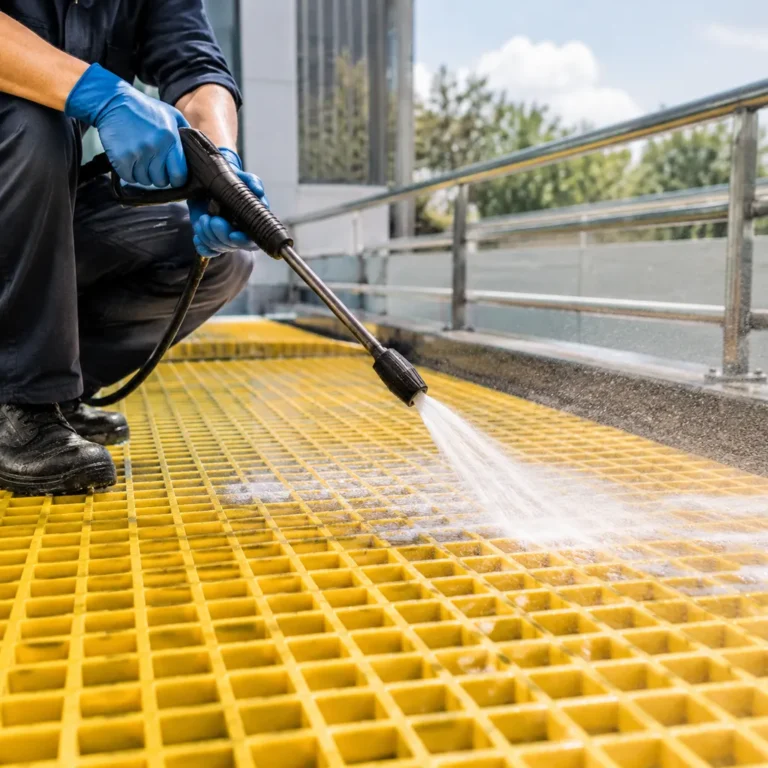
Routine cleanup of FRP grating for wastewater treatment plant walkways keeps algae, scum, and grease from degrading walking traction.
- Pressure Washing: Wash down walking decks using standard high-pressure water sprayers (up to 3,000 PSI) to blast away biological slime, solids, and sediment without gouging the resin surface.
- Degreasing: For grease deposits around bar screens and primary sludge pumps, use a standard mild industrial detergent or neutral pH degreaser. Scrub with a stiff-bristled nylon brush and flush thoroughly with clean water.
- Avoid Destructive Tools: Never use metal scrapers, wire brushes, or impact hammers to chip away dried cake or ice. These tools fracture the resin seal and crush the slip-resistant grit surface.
- Biological Control: Periodic application of diluted bleach or biocidal rinse prevents micro-algae growth on constantly wet platforms near aeration basins without damaging the composite structural matrix.