FRP Grating Guide Types Benefits and Applications
Tired of constantly replacing heavy, rusted steel structures that eat away at your maintenance budget? You are not alone—and there is a far smarter, longer-lasting solution. Enter FRP grating.
In this comprehensive guide, you are going to learn everything you need to know about fiber reinforced polymer grating to make the right choice for your facility. We will break down the essential differences between molded FRP grating and pultruded FRP grating, explore critical advantages like corrosion resistance, slip resistance, and an exceptional high strength-to-weight ratio, and reveal how to pick the ideal resin systems and fasteners for your specific environment.
Whether you are upgrading industrial walkways, outfitting marine docks, or installing heavy-duty trench covers, this complete breakdown has you covered.
Let’s dive right in!
What is FRP Grating?
FRP grating (Fiberglass Reinforced Polymer grating) is an advanced structural composite material engineered as a lightweight, heavy-duty alternative to traditional steel, aluminum, and timber grating. Designed to thrive in demanding industrial settings, it delivers exceptional structural performance, long-term durability, and zero maintenance overhead.
Definition and Composition
FRP grating combines high-strength reinforcing strands with chemical-resistant matrices to form an ultra-durable composite panel.
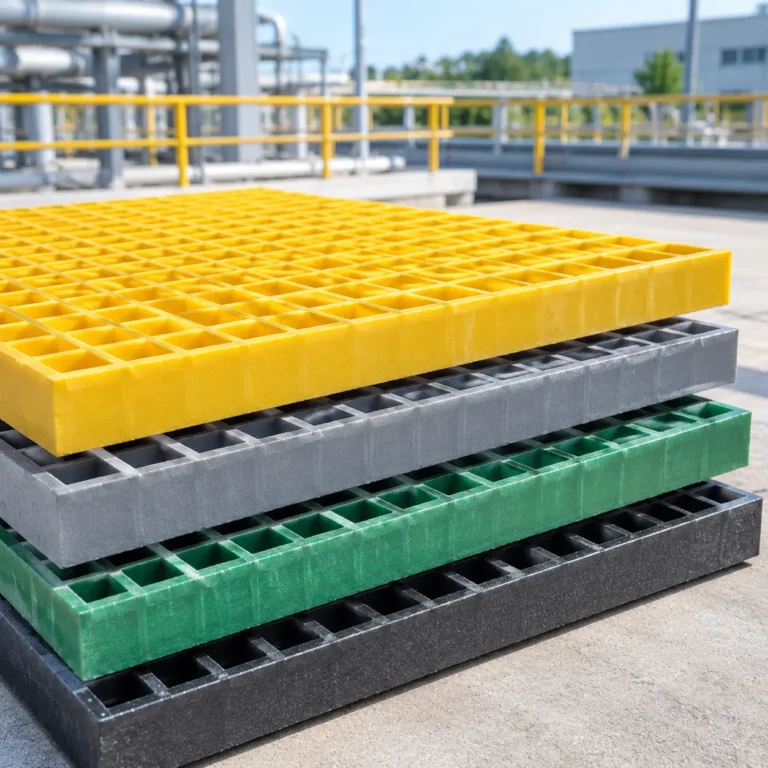
- Glass Fibers: Continuous glass fiber strands supply exceptional tensile strength, flexural rigidity, and high-impact resistance.
- Thermosetting Plastic Resin: High-grade resins—such as isophthalic polyester, vinyl ester, or phenolic—encapsulate the glass fibers, securing superior corrosion resistance against aggressive chemicals, moisture, and saltwater.
- Performance Additives: Integrated UV inhibitors, color pigments, and fire-retardant agents ensure maximum resistance to environmental weathering and flame exposure.
How FRP Grating is Manufactured
High-performance FRP grating is produced using two primary manufacturing methods, each optimized for distinct mechanical requirements:
| Manufacturing Method | Production Process | Core Advantage |
|---|---|---|
| Molded FRP Grating | Continuous glass roving layers are laid wet into a specialized grid matrix mold, thoroughly infused with liquid thermosetting resin, and cured under heat. | Creates a seamless, monolithic panel with equal bidirectional load-bearing strength and superior cut-to-fit flexibility. |
| Pultruded FRP Grating | Glass fibers and structural mats are pulled through a resin bath and drawn through a heated steel shaping die under continuous tension. | Assembles high-density bearing bars and cross rods to achieve maximum unidirectional strength across long spans. |
Key Benefits and Advantages of FRP Grating
We engineer our FRP grating to easily outlast traditional steel, aluminum, and timber in demanding industrial environments. Switching to high-performance fiberglass reinforced polymer gives you long-term durability, structural safety, and massive savings on total lifecycle costs.
Corrosion and Chemical Resistance
Traditional metal rusts and degrades rapidly when exposed to acids, alkalis, salts, and constant moisture.
- Impervious to Chemicals: Premium resin formulations withstand aggressive chemical exposure without losing structural integrity.
- Zero Rust & Rot: Perfect for offshore platforms, chemical plants, and coastal facilities where salt air destroys metal.
- No Maintenance Costs: Eliminates the ongoing cost of sandblasting, scraping, or painting.
High Strength-to-Weight Ratio
Our composite material delivers high strength while remaining extremely lightweight.
- 1/3 the Weight of Steel: Easy to transport, move, and position manually.
- Lower Installation Costs: Eliminates the need for heavy machinery, cranes, or costly structural supports.
- High Load Capacity: Continuous glass fibers bound in a dense thermosetting plastic resin handle heavy foot traffic and equipment loads without sagging.
Slip Resistance and Safety Features
Slips, trips, and falls are major hazards on any industrial walkway surface.
- Anti-Slip Surfaces: Formulated with an embedded quartz grit top layer for high traction in wet, oily, or icy conditions.
- Ergonomic Design: Slight natural flexibility reduces worker leg and back fatigue during long shifts compared to rigid concrete or steel.
Non-Conductive and Fire Retardant Properties
- Electrical Safety: 100% non-conductive properties eliminate sparking and electrical shock hazards around power plants and high-voltage areas.
- Flame Retardancy: Built with fire-retardant additives that meet strict international fire safety standards.
- Thermal Insulation: Maintains stability across extreme high and low temperature swings.
| Feature | Traditional Steel | Our FRP Grating |
|---|---|---|
| Corrosion Resistance | Poor (Rusts quickly) | Exceptional (Chemical proof) |
| Weight Factor | Heavy (Needs cranes) | Lightweight (Easy handling) |
| Conductivity | High electrical/heat risk | 100% Non-Conductive |
| Lifetime Cost | High (Frequent repairs) | Lowest overall cost |
Main Types of FRP Grating
We supply two primary structural styles of FRP grating—molded and pultruded—to handle everything from harsh chemical processing plants to heavy-duty industrial walkways. Choosing the right design depends on your required span, load direction, and site conditions.
Molded FRP Grating
Molded grating is manufactured by weaving continuous glass fibers horizontally and vertically within a liquid thermosetting plastic resin mold. This creates a solid, one-piece mesh panel with equal bidirectional strength.
- Bidirectional Load Capacity: Supports weight evenly across both axes, allowing flexible panel orientation.
- Easy On-Site Modification: Cut around pipes, valves, and complex layouts without compromising structural integrity or needing additional edge banding.
- Maximum Chemical Protection: A higher resin-to-glass ratio provides superior defense against aggressive chemical splashes and constant immersion.
Pultruded FRP Grating
When your application demands high strength over longer spans, pultruded grating is the ideal solution. We engineer these panels by pulling continuous glass fibers and mats through a resin bath and heated die, forming rigid bearing bars connected by locking cross rods.
- Unidirectional High Strength: Superior glass content delivers maximum stiffness and load-carrying capacity along the span of the bearing bars.
- Low Deflection: Exceptional resistance to bending makes it perfect for wide-span walkways and high-traffic platforms.
- Structural Efficiency: Optimizes material usage to offer a lightweight composite material that reduces the load on supporting framing.
Resin Systems and Surface Finishes
We customize each walkway surface with specialized resin formulations and anti-slip textures tailored to your specific working environment:
| Feature | Options & Benefits |
|---|---|
| Resin Systems | Vinyl Ester (maximum resistance to acids and aggressive solvents), Isophthalic Polyester (solid industrial corrosion protection), Orthophthalic (cost-effective for ambient moisture exposure). |
| Surface Finishes | Grit Top (embedded silica grit for maximum slip prevention in oily conditions), Meniscus Top (concave surface for standard slip resistance), Smooth Top (ideal for food-grade or architectural applications). |
Top Applications and Uses for FRP Grating
We see FRP grating solving tough structural problems every day across a wide range of global industries. Traditional materials like steel or wood decay quickly when exposed to aggressive environments, but this fiberglass reinforced polymer composite material delivers long-term durability with virtually zero maintenance.
Industrial Walkways, Platforms, and Catwalks
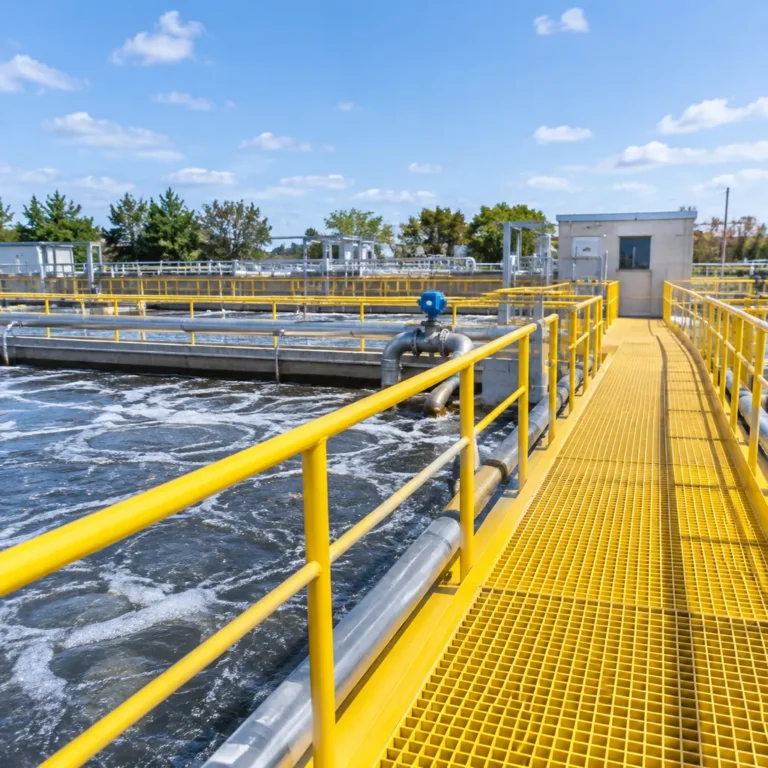
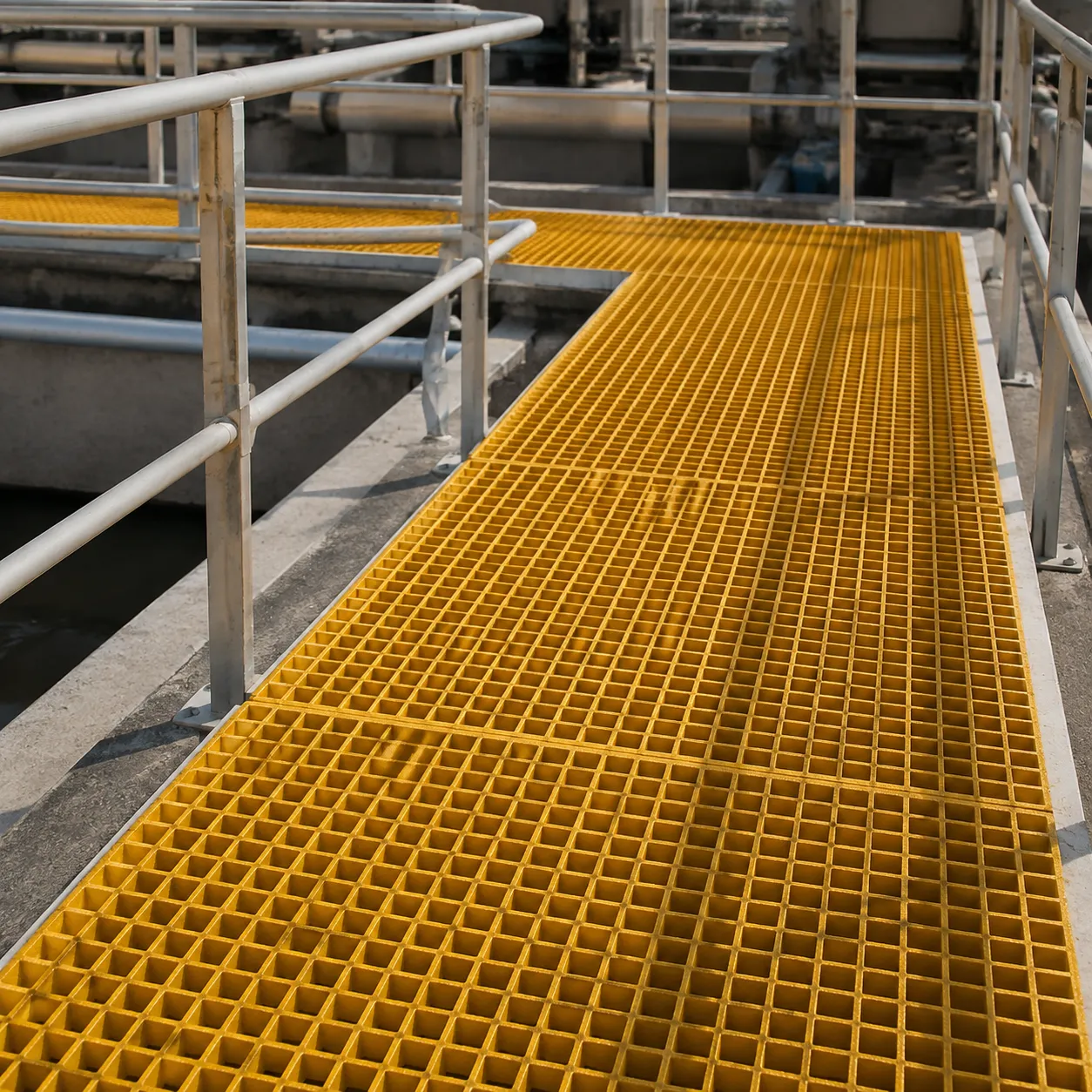
In heavy industrial facilities, safety and longevity are non-negotiable. We regularly supply molded grating and pultruded grating for elevated walkways, maintenance platforms, and catwalks where continuous chemical exposure and foot traffic occur.
- Chemical Processing Plants: Endures direct acid splashes and caustic fumes without rusting or structural breakdown.
- Wastewater Treatment Facilities: Stands up to constant moisture, aggressive gas emissions, and biological buildup.
- Power Substations: Its non-conductive properties protect workers around high-voltage equipment and energized zones.
- Manufacturing Floors: Delivers a high strength walkway surface that handles heavy daily foot traffic and moving equipment.
Marine Docks, Decking, and Offshore Facilities
Saltwater and harsh weather destroy traditional steel decking and rot wood structures rapidly. FRP grating provides unmatched reliability in marine environments because saltwater cannot corrode it.
| Marine Application | Key Benefit |
|---|---|
| Offshore Rigs & Platforms | Reduces overall dead weight on structural frames while delivering extreme fire and impact resistance. |
| Boat Docks & Marinas | UV-resistant surface stays cool under direct sunlight and prevents algae accumulation. |
| Coastal Pier Decking | Prevents structural failure in aggressive splash zones and eliminates costly repainting routines. |
Stair Treads, Ramps, and Trench Covers
Slips, trips, and fall hazards cause frequent workplace injuries. We design targeted fiberglass structural components engineered for safe movement and robust utility containment.
- Stair Treads: Molded with anti-slip grit surfaces and high-visibility nosing to ensure maximum foot traction in wet, oily, or icy conditions.
- Access Ramps: Feature gradual, high-grip inclines ideal for foot traffic and light cart transport in factory and public settings.
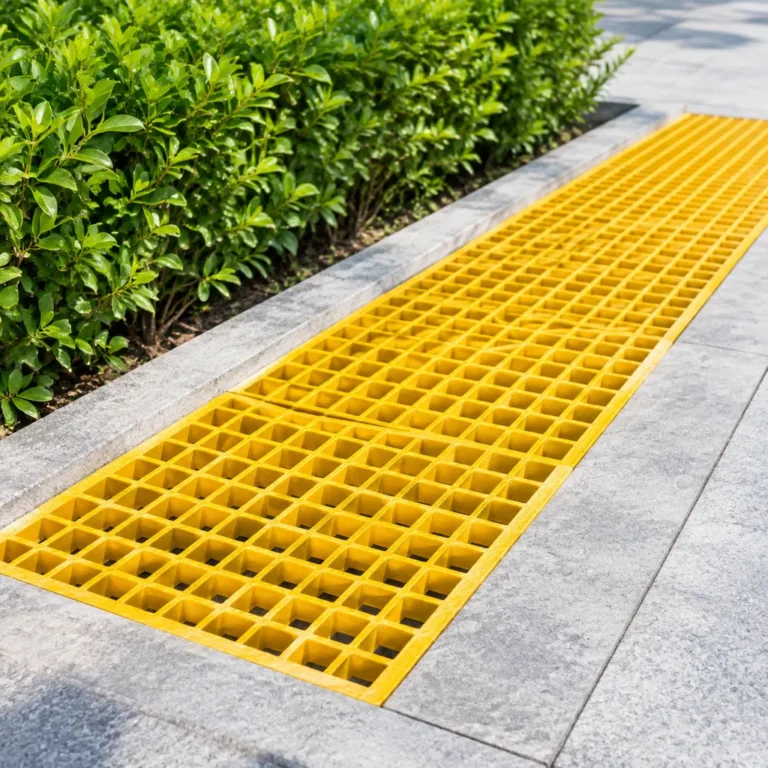
- Trench Covers: Continuous bearing bars give trench covers high load-bearing capacity to protect underground cabling and utility channels while allowing quick drainage.
Selection Guide: How to Choose the Right FRP Grating
Picking the ideal FRP grating for your facility comes down to balancing structural demands, chemical exposure, and installation layout. Here is how I help my global clients select the right specs for long-term reliability.
Molded vs. Pultruded FRP Grating Comparison
Choosing between molded and pultruded options depends on your load requirements and structural spans:
| Feature | Molded FRP Grating | Pultruded FRP Grating |
|---|---|---|
| Load Distribution | Bidirectional: Equal strength in both directions | Unidirectional: High strength along bearing bars |
| Impact Resistance | High: Excellent recovery from heavy impacts | Moderate: High stiffness, lower impact flex |
| Customization | Easy: Simple on-site cutting with minimal waste | Specific: Requires precise straight cuts and edge sealing |
| Ideal Application | Complex pipe cutouts, mesh walkways, chemical plants | Long spans, high load-bearing catwalks, heavy traffic |
Load Capacity and Environmental Factors
To ensure your fiberglass reinforced polymer panels perform safely, evaluate these core operational conditions:
- Traffic and Span Length: Determine whether the surface is for light pedestrian use or heavy industrial loads. Pultruded panels handle wider spans with minimal deflection.
- Resin Selection for Corrosion Resistance:
- Standard Polyester: Ideal for general industrial use and light chemical exposure.
- Isophthalic Polyester: Great for splash zones and moderate chemical environments.
- Vinyl Ester: The ultimate choice for extreme acid, alkali, and high-temperature conditions.
- UV and Fire Protection: For outdoor installations, ensure your composite material includes UV inhibitors and fire-retardant additives to prevent degradation.
Grating Fasteners, Clips, and Accessories
Proper installation requires 316 stainless steel hardware to prevent movement and maintain structural integrity:
- M-Clips: Secure the grating panel down to the support structure through two adjacent bearing bars.
- J-Clips: Anchor grating to structural steel flanges without the need for drilling or welding.
- C-Clips: Connect two adjacent molded grating panel edges to eliminate differential deflection.
- L-Clips: Fasten medium-load grating directly to support angle frames.