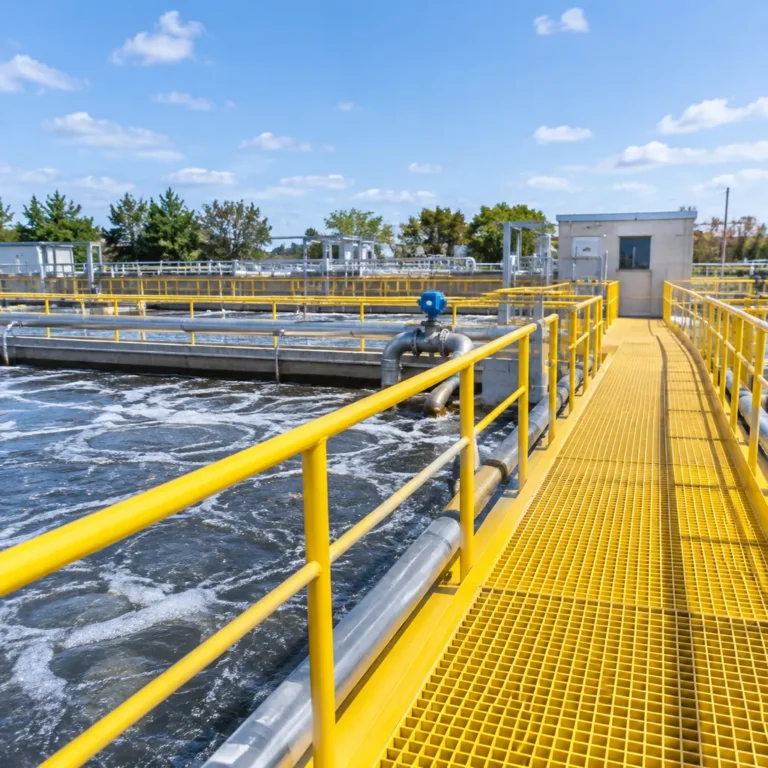
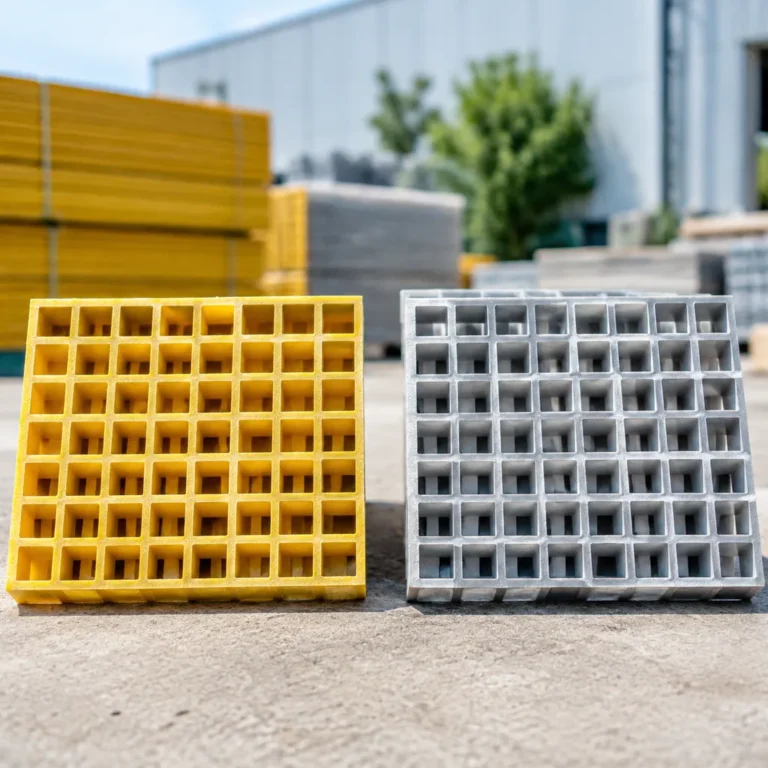
Fiberglass Ductwork vs Metal Ductwork Which Is Best
Are you stuck choosing between fiberglass ductwork vs metal ductwork for your home?
Making the wrong call doesn’t just hurt your wallet upfront—it can lead to noisy airflow, poor indoor air quality, and skyrocketing energy bills down the line.
Both options have clear advantages. Sheet metal offers unmatched durability and clean air, while fiberglass provides built-in thermal insulation and whisper-quiet performance. But which one truly fits your climate, lifestyle, and budget?
In this guide, you’ll get a no-nonsense, side-by-side comparison of durability, costs, and efficiency so you can make the right investment with confidence.
Let’s dive right in.
Overview of Metal vs. Fiberglass Ductwork
Choosing the right distribution system is essential for efficient heating and cooling performance. When evaluating fiberglass ductwork vs metal ductwork, understanding the foundational build of each material helps determine long-term airflow delivery, thermal behavior, and system longevity. Both solutions serve residential and commercial HVAC layouts worldwide, yet they rely on fundamentally different structural compositions.
| Feature | Sheet Metal Ductwork | Fiberglass Ductwork |
|---|---|---|
| Primary Material | Galvanized steel or aluminum | Resin-bonded glass fibers |
| Built-in Insulation | No (requires external wrap/lining) | Yes (integrated thermal barrier) |
| Surface Texture | Ultra-smooth non-porous interior | Textured / coated porous interior |
| Primary Use Case | High-durability, maximum airflow demand | Sound dampening, budget-conscious runs |
What Is Sheet Metal Ductwork?
Sheet metal ducts represent the global industry standard for central air distribution. Typically manufactured from galvanized steel or lightweight aluminum, these systems feature rigid, non-porous walls designed to withstand decades of continuous static pressure.
Key characteristics include:
Rigid Structural Integrity: Resists crushing, sagging, and physical impacts over decades of service.
Low Airflow Resistance: The smooth interior minimizes air friction, maximizing the operational efficiency of your air handler.
Non-Porous Surface: Solid metal prevents moisture penetration, naturally resisting biological contaminants and dust accumulation.
To prevent thermal loss and exterior condensation, standard sheet metal ducts often require external insulation wraps depending on the climate and duct location.
What Is Fiberglass Duct Board and Lined Ductwork?
Fiberglass distribution systems come in two primary forms: standalone duct board panels (fiberboard ducts) and internally lined metal ducts. Duct board is constructed from compressed, resin-bonded glass fibers sealed on the exterior with a reinforced aluminum foil vapor barrier.
Core attributes include:
Integrated Thermal Insulation: The structure itself functions as insulation, eliminating the need for secondary external wraps during HVAC installation.
Built-in Sound Attenuation: The fibrous matrix absorbs mechanical vibrations and operational blower noise directly at the source.
Foil Vapor Barrier: The outer facing seals against moisture ingress while maintaining system pressure.
In internally lined setups, fiberglass mats are affixed to the inner walls of sheet metal to provide immediate acoustic control, combining metal’s structural outer shell with fiberglass sound-dampening capabilities.
Fiberglass Ductwork vs. Metal Ductwork: Performance Comparison
When evaluating fiberglass ductwork vs metal ductwork, performance comes down to how each material handles thermal exchange, airflow acoustics, and daily wear. Both deliver conditioned air, but their physical structures dictate very different results inside your HVAC system.
| Performance Metric | Sheet Metal Ducts (Galvanized Steel) | Fiberglass Duct Board |
|---|---|---|
| Lifespan | 25 to 50+ years | 10 to 20 years |
| Thermal Resistance | Poor without external insulation wrap | High (built-in insulation) |
| Mold Resistance | High (smooth, non-porous surface) | Low to moderate (porous core traps moisture) |
| Acoustic Dampening | Transmits vibration and airflow noise | Absorbs mechanical and rushing air sounds |
| Airflow Resistance | Extremely low static pressure loss | Higher internal friction resistance |
Durability and Expected Lifespan
Sheet metal ducts made from galvanized steel provide unmatched structural rigidity. They withstand high static pressures, do not sag, and resist pest intrusion. With proper sealing, a solid metal system easily lasts over 30 to 50 years.
Standard fiberglass duct board degrades much faster. Over time, air friction and humidity weaken the resin binder, causing edges to fray and seams to loosen after 15 to 20 years. However, in heavy industrial settings with harsh chemical fumes, traditional steel quickly rusts out. In those specialized environments, corrosion-resistant composite systems—such as industrial fiberglass venting integrated with an FRP packed bed scrubber tower—outperform plain galvanized steel every time.
Indoor Air Quality and Mold Prevention
Indoor air quality is one of the most critical differentiators between these two systems:
-
- Sheet Metal Ducts: Non-porous, smooth metal walls prevent dirt, pet dander, and moisture from settling inside. If mold spores enter, they cannot feed on the galvanized zinc surface, making routine sanitization straightforward.
- Fiberglass Ductwork: The porous interior collects dust deep within its strands. If your cooling coils produce excess humidity, the trapped organic debris and moisture turn the duct lining into a prime breeding ground for mold and mildew. Over time, deteriorated internal fibers can also shear off and blow into living areas.
Energy Efficiency and Thermal Insulation
Fiberglass duct board shines in immediate thermal insulation. Because it is fabricated entirely from compressed, foil-faced glass fibers, it natively stops thermal transfer and prevents condensation without needing secondary wraps.
Bare sheet metal is a rapid thermal conductor. Uninsulated metal ducts running through unconditioned attics or crawlspaces suffer massive conductive heat losses and sweat heavily during hot summers. To match the energy efficiency of fiberglass, metal ductwork must be manually sealed and wrapped with external insulation blankets.
Noise Reduction and Acoustic Performance
Fiberglass ductwork is the undisputed winner for acoustic performance. The dense, fibrous core acts as a natural sound baffle, absorbing furnace blower vibrations, airflow rush, and mechanical humming before the sound reaches supply vents.
Sheet metal readily carries sound throughout a structure. Thin-gauge ducts can also produce annoying “oil-canning” or popping sounds as the metal expands and contracts when the heating cycle turns on and off. Metal systems often require dedicated sound attenuators or flexible acoustic transitions near air handlers to match the quiet operation of fiberglass.
Cost, Installation, and Maintenance Differences
Evaluating fiberglass ductwork vs metal ductwork requires balancing upfront labor, long-term servicing, and future system changes. Both systems bring distinct economic and logistical trade-offs to any HVAC installation.
| Feature | Sheet Metal Ducts | Fiberglass Duct Board / FRP |
|---|---|---|
| Material Cost | Moderate to High (galvanized steel) | Lower upfront material cost |
| Labor Cost | Higher (requires custom fabrication) | Lower (easier cutting and assembly) |
| Cleaning Routine | Straightforward; tolerates aggressive tools | Requires soft brushes; prone to damage |
| Modification Ease | High; sections can be recut and resealed | Moderate; prone to core tearing |
Upfront Material and Installation Costs
When comparing initial expenses, fiberglass duct board typically offers lower upfront material and fabrication costs than traditional galvanized steel. Fabricating sheet metal ducts demands specialized sheet-metal brakes, heavier transport, and skilled tinners on-site. In contrast, fiberglass boards are lightweight, pre-insulated, and quickly grooved or folded directly on the job site.
However, in commercial or industrial settings requiring reinforced composite solutions, following a proper FRP duct design guide is critical to establish the exact diameter, wall thickness, and support spacing to avoid structural deficits and budget overruns during HVAC installation.
Ease of Duct Cleaning and Maintenance
Maintenance is where sheet metal holds a clear advantage over standard fiberglass:
-
- Sheet Metal Ducts: The non-porous, smooth interior can withstand rotary mechanical brushes, high-powered vacuum hoses, and sanitizing solutions without degrading the surface.
- Fiberglass Ductwork: The porous internal surfaces trap dust, mold spores, and airborne particulates inside the fiber matrix. Mechanical duct cleaning can easily gouge the inner resin or liner, releasing airborne fiberglass particles into the living space. Specialized, low-pressure cleaning tools are mandatory.
Repair and Modification Flexibility
System remodels, zone additions, or branch rerouting favor rigid sheet metal. Cutting into an existing metal run to insert a new takeoff collar or damper is straightforward, and the rigid substrate holds mechanical fasteners securely.
Working with duct board requires delicate cuts, continuous reinforcement tape, and high-tack mastic to preserve pressure ratings. Once a fiberglass duct wall is breached or deteriorated by moisture, repairing localized damage often requires cutting out entire panels rather than patching a simple seam.
Pros and Cons of Sheet Metal Ductwork
Sheet metal ducts crafted from galvanized steel or aluminum have served as the industry benchmark for decades. When comparing fiberglass ductwork vs metal ductwork, rigid metal options offer undeniable mechanical strength, but they also bring specific trade-offs that impact long-term maintenance and installation costs.
Advantages of Sheet Metal Ducts
We frequently recommend sheet metal for systems where structural endurance and clean air are the top priorities. The key benefits include:
-
- Superior Indoor Air Quality: The solid, non-porous interior prevents dust, allergens, and mold spores from embedding into the duct walls.
- Easy Duct Cleaning: Metal easily withstands aggressive mechanical brushing and high-powered vacuuming during routine maintenance without degrading.
- Minimal Airflow Resistance: The smooth metal interior allows air to move freely, reducing static pressure and helping the HVAC blower run efficiently.
- Pest and Fire Resistance: Solid sheet metal resists rodent intrusion and meets the strictest commercial fire codes without breaking down.
- Long Service Life: Properly installed and sealed sheet metal can easily last 25 to 50 years with minimal structural wear.
Disadvantages of Sheet Metal Ducts
Despite their strength, metal ducts present practical challenges that require extra planning and expense:
-
- Zero Inherent Thermal Insulation: Bare galvanized steel conducts heat rapidly. Without an added layer of external wrap, it suffers high energy losses and heavy condensation sweating in unconditioned spaces.
- Poor Acoustic Performance: Metal amplifies equipment vibration, popping sounds during pressure changes, and the rushing sound of air throughout the building.
- Higher Total Installation Cost: Sheet metal is heavy, labor-intensive to fabricate, and requires skilled sheet metal technicians to measure, hang, and seal properly.
- Vulnerability to Moisture and Corrosion: In humid basements, coastal areas, or industrial settings, standard galvanized steel can rust over time. In these aggressive environments, modern installations frequently switch to corrosion resistant FRP ducts and pipes to eliminate moisture degradation and chemical attack entirely.
Pros and Cons of Fiberglass Ductwork
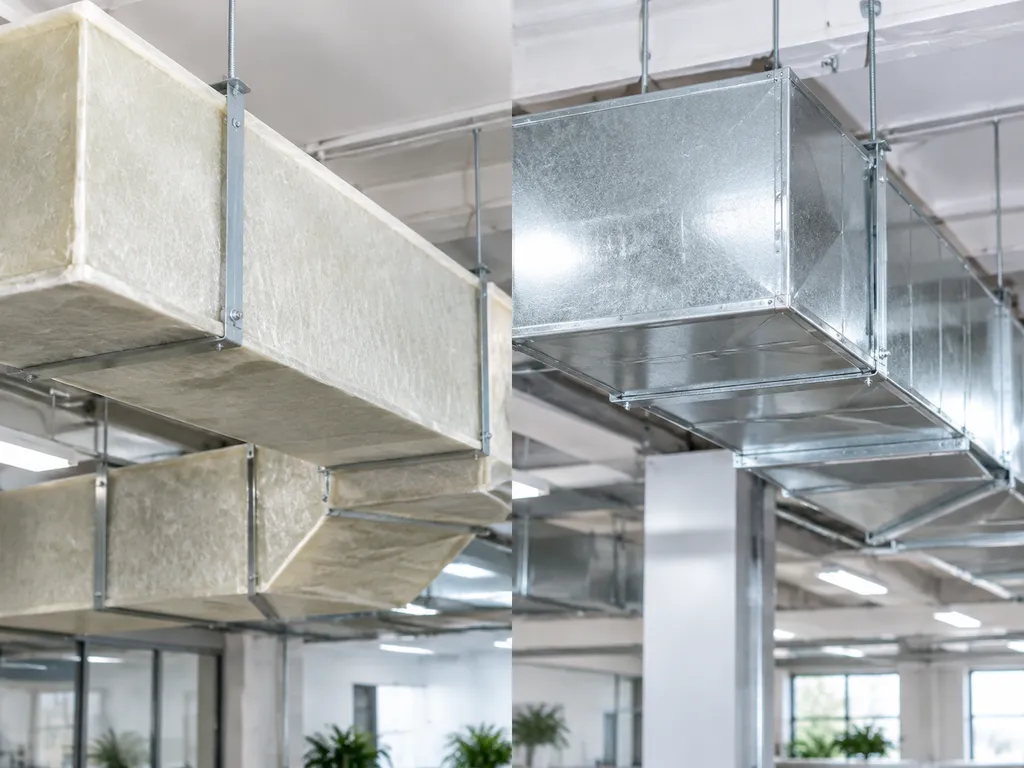
Weighing fiberglass ductwork vs metal ductwork comes down to balancing acoustic comfort and built-in insulation against long-term maintenance and indoor air hygiene. Fiberglass ducts—primarily fabricated from rigid duct board or reinforced composite materials—deliver distinct operational benefits alongside a few notable trade-offs.
Advantages of Fiberglass Ducts
-
- Integrated Thermal Insulation: Fiberglass duct board comes pre-insulated with built-in thermal resistance. This eliminates the extra labor and material costs required to externally wrap bare sheet metal to prevent condensation and heat loss.
- Superior Acoustic Performance: The fibrous texture natively absorbs sound waves, dampening HVAC equipment hums, fan turbulence, and airflow whistling far better than unlined metal systems.
- Corrosion Resistance: Unlike standard galvanized steel, composite fiberglass materials do not rust when exposed to moisture or chemical fumes. In specialized commercial settings where oxidation quickly destroys metal, incorporating composite frameworks and resilient pultruded fiberglass tube sizes provides permanent structural protection against aggressive environments.
- Lower Upfront Installation Overhead: Because the material is exceptionally lightweight and combines insulation and structure into a single board, handling and hanging these ducts requires less crew power and fewer structural fasteners.
Disadvantages of Fiberglass Ducts
-
- Higher Airflow Resistance: The porous, textured interior creates more friction loss than smooth metal surfaces, forcing blowers to work harder to push air across long runs.
- Vulnerability to Moisture and Microbial Growth: If the vapor barrier fails or condensation accumulates, the porous core can trap moisture, creating an ideal breeding ground for mold and bacteria that directly compromise indoor air quality.
- Challenging Duct Cleaning: Standard high-pressure rotary brushes and aggressive vacuum sweeps used in metal duct cleaning easily tear the fragile interior lining of fiberboard, stripping away insulation and releasing irritating airborne particulates.
- Shorter Operational Lifespan: Even under optimal conditions, fiberglass ducts degrade significantly faster than rigid sheet metal, often requiring full replacement after 15 to 20 years.
Which Ductwork Is Best for Your Home?
Choosing between fiberglass ductwork vs metal ductwork comes down to your home’s specific layout, your local climate, and your long-term comfort priorities. Both systems deliver conditioned air throughout your living space, but their structural differences impact indoor air quality, sound levels, and utility bills in distinct ways.
When to Choose Sheet Metal Ductwork
Sheet metal ducts remain the gold standard for residential heating and cooling systems. I consistently recommend traditional sheet metal for homeowners who prioritize longevity and clean air.
-
- You prioritize indoor air quality: Smooth galvanized steel prevents dust, pet dander, and allergens from settling into porous surfaces.
- You want easy duct cleaning: Rigid metal surfaces withstand mechanical brush cleaning without tearing or releasing airborne fibers.
- You plan on staying long-term: Sheet metal offers unmatched structural integrity, easily lasting 30 to 50 years without degrading.
- You want optimal airflow: Low airflow resistance inside smooth metal pipes reduces strain on your HVAC blower motor.
When to Choose Fiberglass Ductwork
Fiberglass duct board and lined duct options serve specific residential needs, particularly where noise control and budget constraints dominate the decision.
-
- You need superior acoustic performance: The natural damping properties of fiberglass absorb blower vibration and air rush noises, keeping your living areas quiet.
- You want built-in thermal insulation: Pre-insulated duct board minimizes conductive heat loss without requiring a separate exterior insulation wrap.
- You are working with strict upfront budget limits: Lightweight fiberglass duct systems require fewer specialized tools to fabricate, translating to lower initial HVAC installation costs.
Key Climate and Budget Considerations
Your geographical location plays a massive role in system reliability. In hot, humid climates, fiberglass ductwork requires diligent moisture control; any internal condensation can become trapped within the porous fiberboard ducts, creating a high risk of mold growth. Conversely, sheet metal handles variable humidity exceptionally well, provided the exterior is sealed and wrapped properly.
| Feature | Sheet Metal Ducts | Fiberglass Duct Board |
|---|---|---|
| Initial Investment | Moderate to High | Low to Moderate |
| Average Lifespan | 30–50+ Years | 10–20 Years |
| Thermal Insulation | Requires external wrap | Built into the core material |
| Acoustic Dampening | Low (can echo or pop) | High (absorbs sound naturally) |
| Maintenance & Cleaning | Simple, standard mechanical brushing | Delicate, specialized care required |
| Best Climate Suitability | All climates (ideal for humid zones) | Dry to moderate humidity climates |
For homes where long-term value, cleaner air channels, and minimal replacement worries are paramount, sheet metal delivers the highest return on investment. For quick retrofits or installations where equipment noise needs immediate suppression on a tight budget, fiberglass duct board provides a functional, quiet alternative.