FRP Grating for Electrical Substations Safety Guide
The Role of FRP Grating in Electrical Substation Safety
High-voltage power distribution facilities demand strict risk mitigation strategies to safeguard personnel and secure critical infrastructure. Fiberglass reinforced polymer (FRP) grating serves as a vital structural safety barrier, engineered specifically to eliminate electrical hazards and physical workplace risks across energized environments.
Mitigating High-Voltage Electrical Hazards
Operating in proximity to energized transformers, switchgear, and busbars exposes workers to severe electrical hazards. FRP grating plays a decisive role in neutralizing these operational threats:
-
- Step and Touch Potential Reduction: Disconnects the electrical path between personnel and the earth, mitigating the lethal risks associated with ground-fault currents.
- Elimination of Stray Voltage Paths: Inherent electrical insulation prevents stray electrical currents from traveling across walkways, access platforms, and trench spans.
- Non-Sparking Characteristics: Eliminates mechanical spark risks near combustible equipment, cooling oils, and backup battery systems.
The Critical Need for Non-Conductive Walkways
Substation access platforms, trench covers, and perimeter paths must not conduct electricity. Traditional metallic infrastructure creates unintended conductive pathways that compromise operator safety during insulation breakdowns or lightning surges.
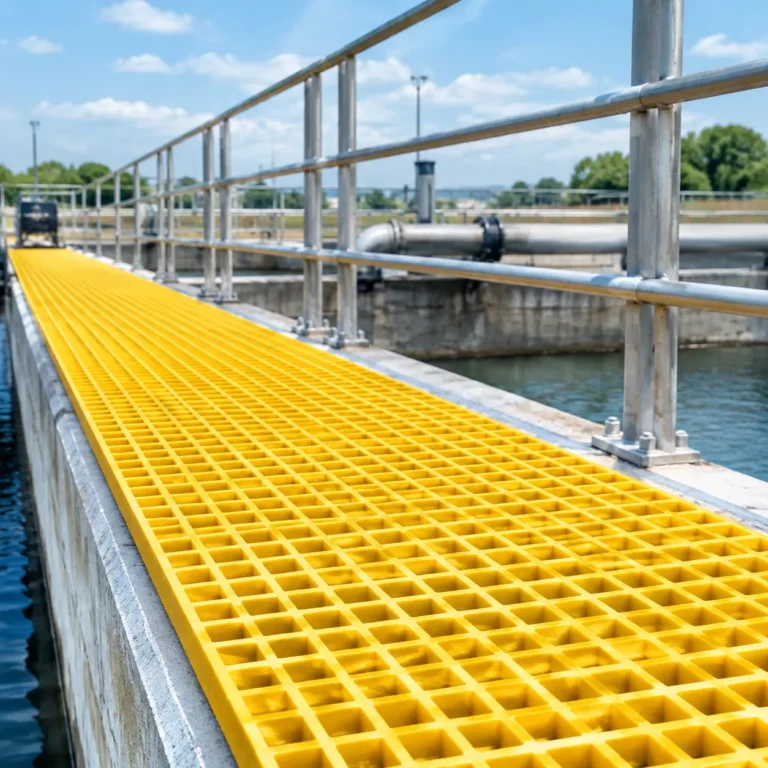
Non-conductive FRP walkways deliver high dielectric strength, ensuring that flooring systems never act as an electrical bridge. Whether installed over outdoor cable trenches or inside indoor control rooms, these specialized profiles isolate workers from electrical faults beneath their feet, maintaining a safe walking surface under routine operations and emergency fault conditions.
Compliance with Industrial Electrical Safety Standards
Safety in power transmission and distribution demands strict adherence to rigorous engineering criteria. Incorporating industrial-grade FRP grating supports essential compliance protocols across modern substation builds:
-
- Flame Retardancy Performance: Manufactured with self-extinguishing resin systems meeting recognized Class 1 flame spread index parameters.
- Dielectric Integrity: Engineered to meet standard dielectric breakdown resistance requirements, guaranteeing zero conductivity across high-voltage zones.
- Structural Durability: Delivers reliable load-bearing performance for pedestrian walkways and maintenance equipment access while resisting chemical degradation from battery acid and outdoor environmental exposure.
Key Electrical Insulation Properties of FRP Grating
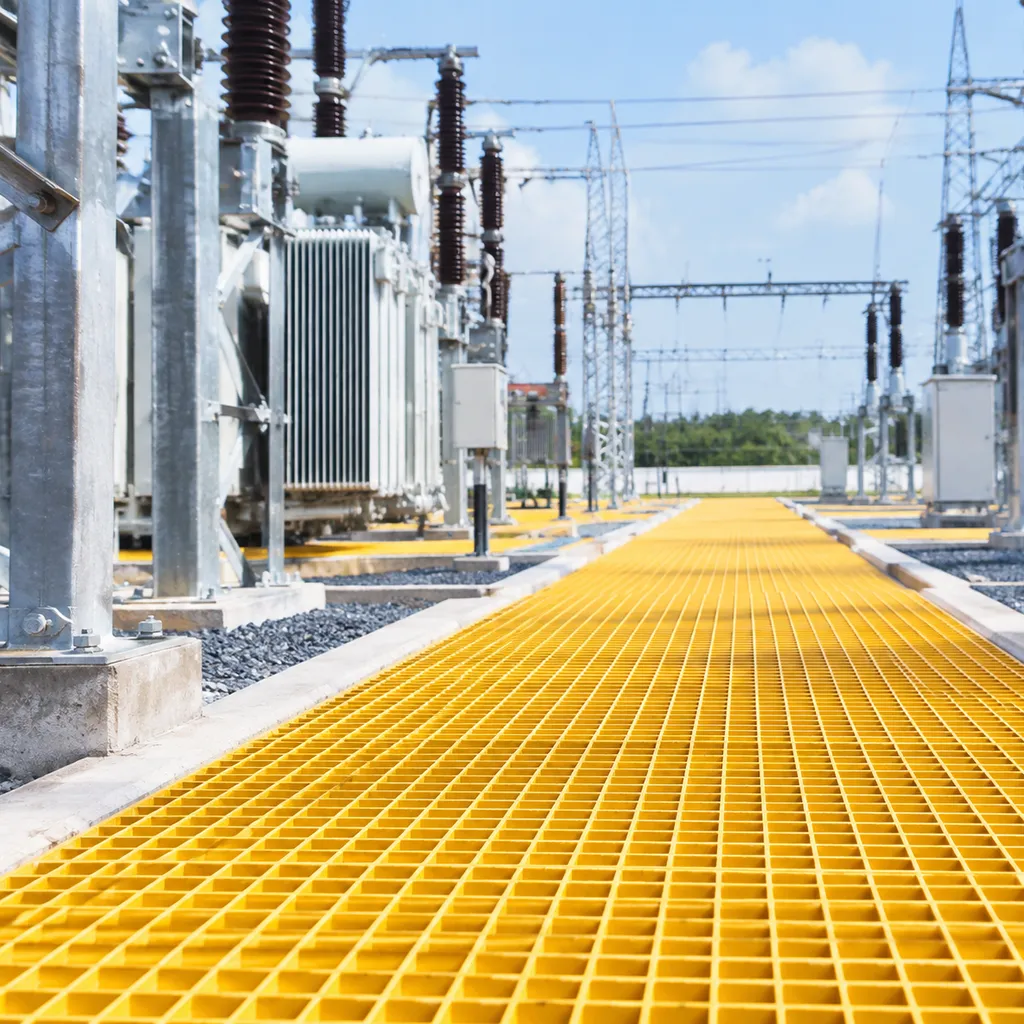
When managing power distribution facilities, choosing the right walkway materials directly impacts crew survival. Our fiberglass reinforced polymer solutions isolate personnel from lethal currents. By serving as an impenetrable non-conductive material, FRP grating eliminates conductive paths around switchgear, transformers, and distribution banks.
Inherent Non-Conductivity and High Dielectric Strength
Standard metallic platforms continuously introduce shock risks through touch and step potential. FRP grating neutralizes this danger entirely through its structural composition:
-
- Zero Electrical Continuity: The composite matrix cannot carry an electric current, eliminating stray voltage hazards across maintenance walkways.
- High Dielectric Strength: High-grade glass reinforcements paired with specialized resin barriers withstand significant electrical pressure before breakdown, ensuring dependable high-voltage protection.
- Total Worker Isolation: Personnel remain completely decoupled from ground-fault paths, even during sudden phase-to-ground faults.
To see how these composite profiles are engineered for industrial facilities, explore our detailed FRP grating guide to types, benefits, and applications.
Arc Flash and Spark Prevention
Dropped tools, dragging equipment, or loose hardware on conventional steel grating create instant spark hazards that can trigger secondary explosions or arc flash events.
-
- Non-Sparking Impact: Accidental contact with hand tools, steel boots, or testing gear produces no mechanical sparks.
- Non-Magnetic Build: FRP does not interact with massive electromagnetic fields generated by high-voltage currents, preventing unexpected induction heating and magnetic interference near busbars.
- Arc Attenuation: By preventing direct metal-to-metal short circuits, the grating actively minimizes the risk of sustaining an electric arc.
Electrostatic Dissipation and Fire Retardance
Substation safety requires active defense against both static accumulation and thermal runaway. Our grating formulations are tailored to keep your operations secure:
-
- Controlled Static Bleed: Specialized formulations manage surface resistivity, preventing static charges from building up around sensitive relays, breakers, and microprocessors.
- Flame-Retardant Resin Matrices: Formulated with self-extinguishing additives, the material resists ignition and will not sustain combustion if exposed to high heat or localized electrical faults.
- Toxic Fume Suppression: Fire-retardant configurations limit smoke density, maintaining visibility and breathable air in enclosed switchgear vaults during an electrical emergency.
Additional Physical Safety Benefits for Substation Personnel
Electrical substations expose field crews to more than just high-voltage hazards. Slips, trips, falls, and joint fatigue remain persistent physical threats during routine inspections and emergency repairs. We engineer our FRP grating for electrical substations safety to tackle these day-to-day physical hazards alongside electrical insulation.
| Hazard / Factor | Traditional Steel Grating | FRP Substation Grating |
|---|---|---|
| Wet & Oily Traction | Turns slick quickly; requires aftermarket coatings | Permanent gritted or concave slip-resistant surface |
| Environmental Rust | Corrodes, flakes, and loses structural load capacity | 100% rust-free; impervious to rain, salt air, and acid |
| Impact on Joints | Rigid, unforgiving surface increases knee and back fatigue | Natural slight deflection cushions steps and reduces strain |
| Handling Hazard | Heavy panels require multi-person lifts or cranes | Lightweight structure allows easier, safer manual positioning |
Superior Slip Resistance to Prevent Slips, Trips, and Falls
Rain, morning frost, and leaks around transformer oil containment pits create slick walking surfaces. Slipping inside an active electrical yard introduces immediate catastrophic risks.
Our fiberglass reinforced polymer grating features integrated anti-slip top surfaces:
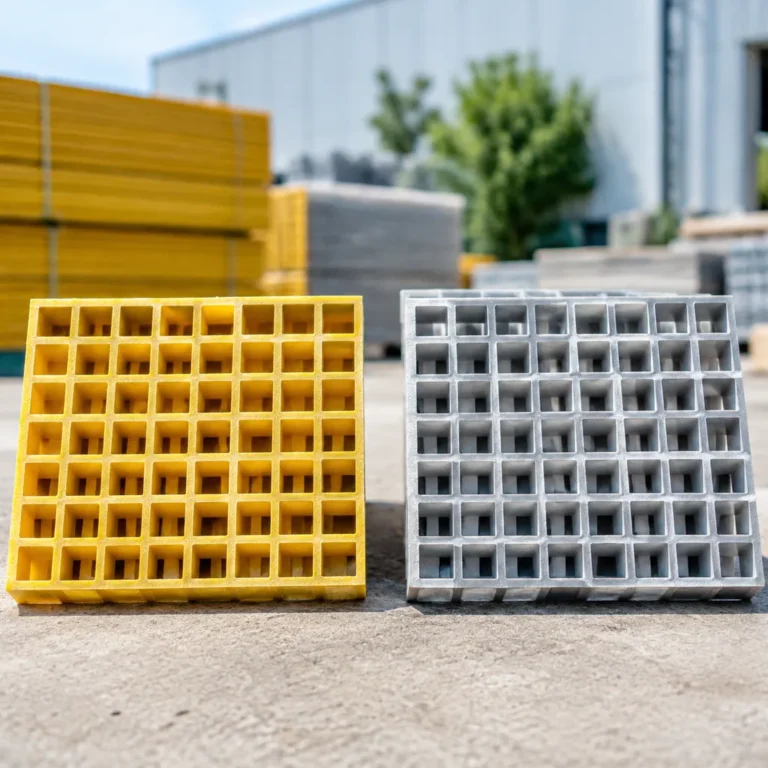
Molded-in Meniscus Surfaces: A concave profile that grips boot soles in wet outdoor yards.
Embedded Quartz Grit: Fused directly into the resin matrix to maintain high friction even in oily environments or icy winters.
Unlike painted diamond plate or coated steel that smooths out under foot traffic, our slip resistant surface does not peel or wear away easily, keeping walkways secure year-round.
Corrosion and Moisture Resistance in Harsh Outdoor Conditions
Outdoor power distribution facilities face decades of heavy rain, UV radiation, coastal salt spray, and battery room chemical fumes. Moisture causes carbon steel to oxidize, rust, and thin out over time, leading to unexpected structural failures beneath a technician’s feet.
Our composite grating uses industrial-grade resin formulations that completely ignore moisture and corrosive chemicals. Review our frp grating sizes standard and custom options guide to find the right panel profiles and load-bearing configurations for outdoor drainage channels and walkways.
Ergonomic Benefits to Minimize Worker Fatigue
Technicians often spend long shifts walking switchgear rooms, climbing service platforms, and standing during switch maintenance. Concrete floors and unyielding steel bars transmit shock directly into joints, knees, and lower backs, accelerating fatigue and decreasing situational awareness near energized gear.
We build our panels with natural structural elasticity. This built-in ergonomic resilience provides subtle cushioning underfoot. It relieves pressure on maintenance personnel without sacrificing structural rigidity, allowing teams to stay sharp, comfortable, and focused on site safety.
Critical Application Areas in Electrical Substations
High-voltage power distribution facilities demand materials that actively reduce operational risks. We deploy fiberglass reinforced polymer solutions across key layout sectors where electrical insulation properties and worker safety matter most.
Switchgear Areas and Control Rooms
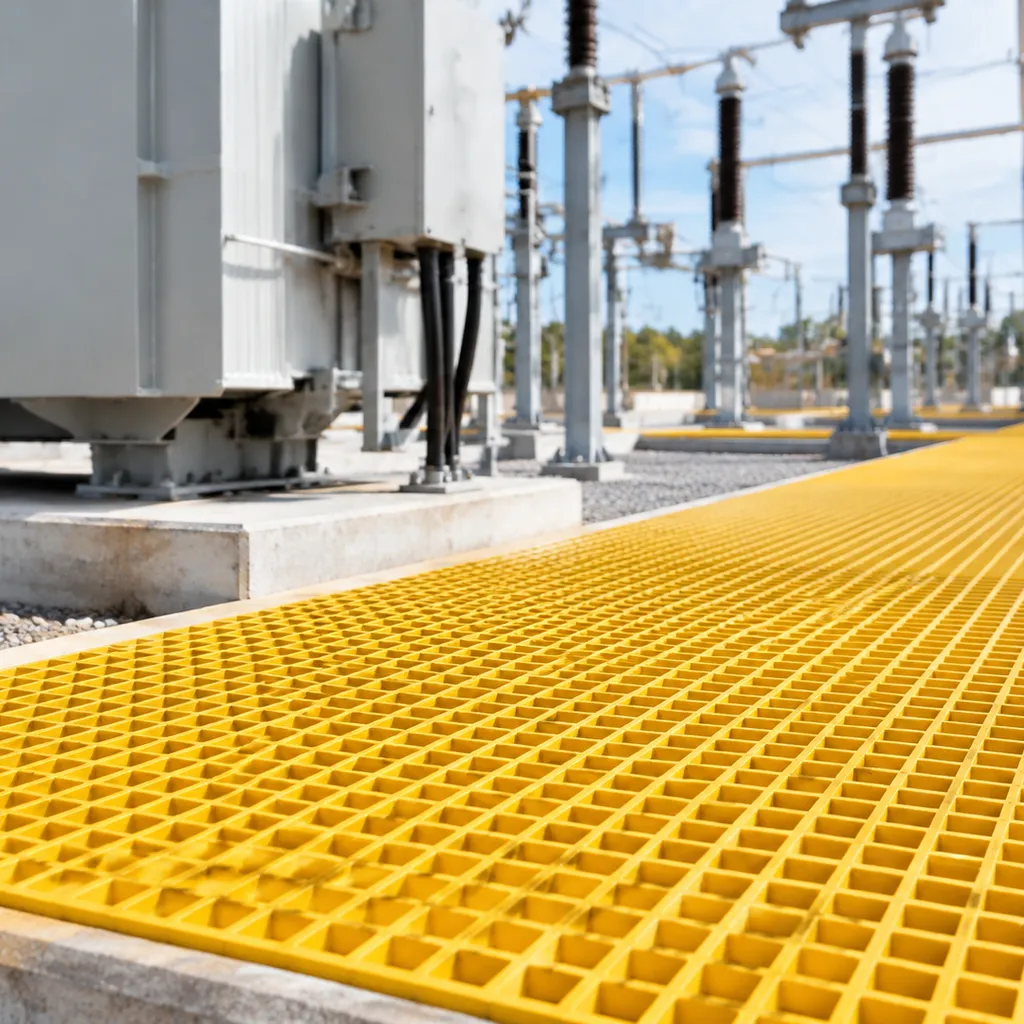
Indoor and outdoor switchgear stations present continuous risks of touch potential and static buildup. We install non-conductive FRP flooring around operating panels, relay racks, and control banks to ensure technicians stand on electrically isolated surfaces.
-
- Complete Ground Isolation: Eliminates stray current transfer during switching operations.
- Fire Safety: Formulated with fire-retardant resins to prevent flame propagation near high-voltage gear.
- Ergonomic Surface: Reduces physical fatigue for operators standing for extended operational shifts.
Transformer Walkways and Maintenance Platforms
Transformer yards and oil containment pits expose crews to severe hazards, including oil slicks, high step potentials, and elevated working heights. We fabricate transformer maintenance walkways and perimeter platforms using molded FRP grating featuring an embedded, slip-resistant surface.
-
- Oil and Chemical Immunity: Resists dielectric oils, cooling fluids, and moisture without deteriorating.
- Permanent Traction: Quartz grit finishes ensure firm footing even when coated in transformer oil.
- Structural Reliability: High strength-to-weight ratios support dynamic maintenance loads without requiring heavy structural steel modifications.
Trench Covers and Cable Tray Access Ways
Substation yards rely on underground trenches to route massive power cables and control wiring. Traditional concrete or steel trench plates are heavy, conduct electricity, and corrode quickly in wet soil environments. We provide specialized trench access solutions and durable FRP covers designed for simple removal during cable upgrades and inspections.
| Feature | Steel / Concrete Covers | FRP Trench Covers |
|---|---|---|
| Conductivity | High / Potential hazard | Non-conductive material |
| Handling | Requires heavy lifting equipment | Two-person manual lift |
| Corrosion Resistance | Prone to rust and spalling | Completely rustproof |
| Load Capacity | High | Tailored pedestrian to vehicular |
Non-Conductive Safety Fencing and Barriers
Substation perimeters, capacitor bank surrounds, and high-voltage protection zones require fencing that will not act as a conductor during ground-fault surges. We engineer non-conductive barriers and safety fencing that eliminate the need for complicated earthing and bonding systems. These barriers withstand continuous UV exposure and harsh outdoor conditions while keeping unauthorized personnel safely separated from energized equipment.
FRP Grating vs. Traditional Steel in High-Voltage Environments
When designing power distribution facilities, choosing between traditional galvanized steel and fiberglass reinforced polymer comes down to long-term reliability and worker safety. While steel has historically been the default choice for industrial walkways, its natural conductivity and susceptibility to rust make it a liability in high-voltage zones. Switching to our FRP grating provides an immediate safety upgrade that eliminates the primary failure points of metal installations.
| Performance Factor | Traditional Steel Grating | Substation-Grade FRP Grating |
|---|---|---|
| Electrical Conductivity | High (Conductive) | None (Inherent Insulator) |
| Grounding Needs | Mandatory bonding & inspection | Zero grounding required |
| Corrosion Resistance | Prone to rust and chemical pitting | Immune to moisture, acids, and ozone |
| Weight | Heavy (Requires lifting machinery) | Lightweight (Manual two-person carry) |
| Maintenance | Regular recoating and descaling | Virtually maintenance-free |
| Installation Safety | Risk of contact with overhead lines | Safer manual maneuvering |
Electrical Shock Risk and Grounding Requirements
Steel grating presents severe electrical hazards inside energized substations. Metal structures readily transfer stray voltage, touch potentials, and step potentials during ground fault incidents. To make steel walkways somewhat safe, crews must physically bond every section to the substation grounding grid. This installation process is labor-intensive, and loose bonding straps can turn an ordinary walkway into a live conductor.
In contrast, fiberglass reinforced polymer is a completely non-conductive material. It features exceptional dielectric strength, meaning it naturally blocks electric current instead of carrying it. By using non-conductive walkways around switchgear and transformers, we eliminate the need for secondary grounding bonds and isolate crew members directly from high-voltage protection risks.
Corrosion Resistance and Structural Longevity
Outdoor substations face continuous weathering, ultraviolet radiation, and exposure to corrosive compounds like transformer oils, battery acids, and airborne moisture.
-
- The Problem with Steel: Galvanized coatings eventually chip, scratch, or oxidize. Once exposed to moisture or corrosive substation chemical runoff, steel rusts quickly, degrading its load-bearing capacity and creating concealed structural hazards.
- The FRP Solution: Our grating uses specialized resin matrices—such as isophthalic polyester or vinyl ester—to provide complete corrosion resistance. It does not rust, flake, or rot, retaining its structural integrity in harsh industrial outdoor environments for decades.
Weight, Ease of Installation, and Maintenance Costs
Steel grating is exceptionally heavy. Installing it around energized equipment often requires cranes or overhead rigging, which significantly increases the danger of accidental contact with overhead high-voltage transmission lines.
Because fiberglass composite grating weighs roughly a third of structural steel, our crews can transport, cut, and position panels by hand without heavy machinery. For spans requiring extreme stiffness and strength over wide trenches, high-strength FRP pultruded grating delivers exceptional load-bearing performance without the excessive weight. Once installed, it requires zero sandblasting, painting, or rust prevention treatments, cutting ongoing operational downtime and lifecycle maintenance costs.
How to Select the Right FRP Grating for Substation Safety
Selecting the proper fiberglass reinforced polymer grating for power distribution facilities comes down to matching site hazards with the right material configuration. When we evaluate an electrical substation layout, we look closely at resin chemistry, mechanical load profiles, and walking surface conditions to guarantee long-term worker safety. For complex plant layouts requiring tailored dimensions, our team provides custom FRP fabrication to meet exact substation footprint requirements.
Choosing the Right Resin System for Fire and Chemical Resistance
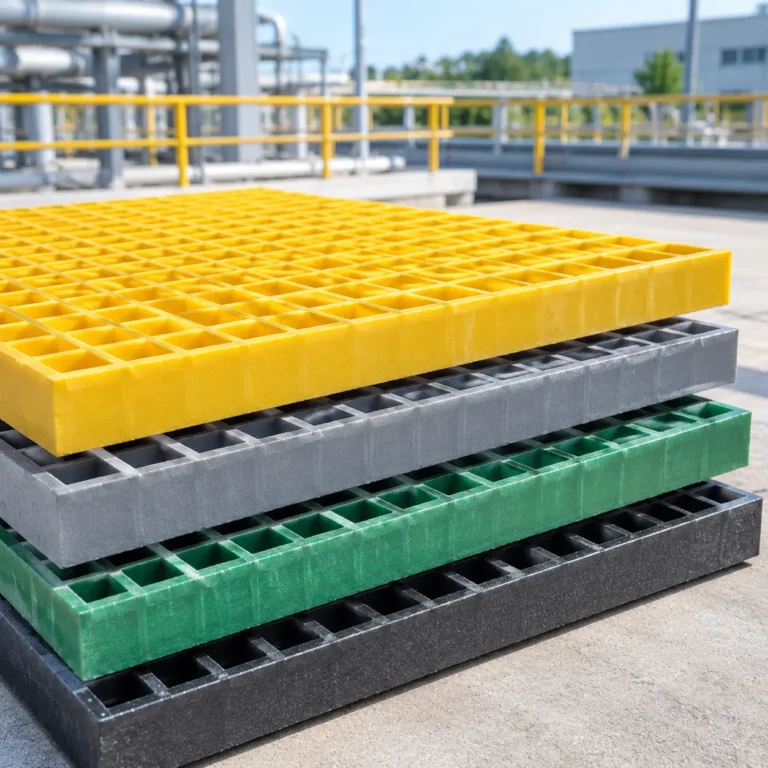
The resin matrix binds the glass fibers and establishes your primary defense against fire, UV rays, and corrosive chemicals like transformer oils or battery acids. Different operational zones inside a substation demand specific resin formulations to ensure high-voltage protection and physical durability.
| Resin Type | Primary Benefit | Best Substation Application |
|---|---|---|
| Isophthalic Polyester | Reliable industrial corrosion resistance and flame spread suppression | General outdoor walkways, yard trench covers, and perimeter paths |
| Vinyl Ester | Maximum corrosion resistance against aggressive acids and severe heat | Battery rooms, chemical storage areas, and transformer bund pits |
| Fire-Retardant Formulations | Self-extinguishing properties with low flame spread index | High-density cable trays, switchgear rooms, and indoor control areas |
Reviewing our complete lineup of structural fiberglass products ensures you select the correct matrix formulation without compromising dielectric strength.
Determining Load Capacity and Structural Span Requirements
Substation flooring must support different stress profiles, ranging from light pedestrian inspection traffic to rolling maintenance equipment. Getting the load rating right prevents structural deflection and safeguards field personnel working near energized equipment.
-
- Pedestrian Walkways: Standard 25 mm to 38 mm mesh depths handle concentrated walking loads across standard support spans.
- Heavy Utility Zones: Thicker cross-sections (50 mm or heavier) support transport carts, portable testing gear, and emergency response teams.
- Trench and Sump Spans: Measure support beam distances carefully to select the correct bar thickness and avoid excessive flex over long runs.
Selecting Surface Textures for Optimal Traction
Transformer cooling fluids, outdoor rain, and ice create severe slip hazards around live conductors. The right surface finish on non-conductive material provides the traction needed to prevent accidental falls into high-voltage electrical hazards.
-
- Gritted Quartz Top: Embedded silica grit provides maximum traction in oily, wet, or freezing conditions. It is our top recommendation for outdoor switchyards.
- Meniscus Top: A concave, molded surface that provides dependable slip resistance for standard indoor control rooms and clean utility corridors.
- Smooth Top: Suitable strictly for non-traffic vertical barriers or non-conductive safety fencing where foot traction is not a factor.