Molded FRP Grating Benefits and Applications Guide
What Is Molded FRP Grating?
Molded FRP (Fiberglass Reinforced Plastic) grating is a structural panel engineered by combining continuous glass fiber roving with thermoset resins. Designed for harsh industrial environments, it serves as a reliable, high-performance alternative to traditional steel and aluminum bar grating.
Manufacturing Process and Structural Design
Molded fiberglass grating is produced in specialized, open heated molds through a systematic layering process:
- Continuous Weaving: High-grade continuous fiberglass strands are placed in the mold in alternating bidirectional layers.
- Resin Wetting: The mold is thoroughly saturated with a liquid thermoset resin matrix (such as orthophthalic, isophthalic, or vinyl ester).
- One-Piece Thermal Curing: The composite is cured under heat to form a single, integrated monolithic panel.
This continuous molding technique gives the panel bidirectional strength, meaning it carries loads effectively in both directions. Field cuts for pipes, electrical conduits, or support columns can be made without compromising overall structural integrity or requiring additional edge banding.
Key Differences Between Molded and Pultruded FRP Grating
Choosing the right fiberglass grating depends on structural spans, load requirements, and layout complexity.
| Feature | Molded FRP Grating | Pultruded FRP Grating |
|---|---|---|
| Manufacturing Method | Interwoven continuous fibers cured in an open mold | Continuous pull process through heated dies |
| Load Distribution | Bidirectional (equal strength across width and length) | Unidirectional (high strength along the span) |
| Impact Resistance | Exceptional; absorbs impacts without permanent deformation | Moderate; higher stiffness with less flexural recovery |
| Field Customization | Easy to cut on-site without edge banding or loss of strength | Requires careful cutting and additional tie-bar support |
| Chemical Resistance | Higher resin-to-glass ratio (approx. 65% resin / 35% glass) | Higher glass-to-resin ratio (approx. 70% glass / 30% resin) |
| Best Suited For | Complex floor layouts, walkways, trench covers, wash bays | Long spans, heavy unidirectional loads, bridge decks |
Key Benefits of Molded FRP Grating
We engineer molded fiberglass grating to solve the most demanding structural challenges in harsh industrial environments. Traditional materials like steel and wood deteriorate quickly when exposed to moisture, aggressive chemicals, and heavy traffic. Molded fiberglass reinforced plastic delivers unmatched durability, lower total cost of ownership, and outstanding structural integrity across all installations.
| Feature | Molded FRP Grating | Traditional Steel Grating |
|---|---|---|
| Weight | ~1/3 the weight of steel | Heavy, requires lifting gear |
| Corrosion Resistance | Immune to rust, acids, and salts | Prone to oxidation and rust |
| Electrical Conductivity | Non-conductive (High safety) | Conductive (Shock hazard) |
| Maintenance | Virtually zero maintenance | Regular painting and descaling |
| Slip Resistance | Built-in grit or concave surface | Slippery when wet or oily |
High Strength-to-Weight Ratio and Lightweight Advantages
Our molded panels feature a one-piece interwoven mesh design that distributes loads bidirectionally. This structural construction delivers impressive load-bearing capacity while remaining roughly one-third the weight of steel.
- Lower Transport Costs: Lighter panels reduce freight expenses for domestic and international shipments.
- Rapid Installation: Crew members can move and position panels manually without cranes or heavy rigging equipment.
- Easy Field Customization: Cutting and fitting on-site requires standard hand tools, eliminating the need for hot-work permits or field welding.
Discover our full lineup of molded FRP grating engineered for heavy-duty structural applications.
Corrosion and Chemical Resistance
Corrosion destroys metallic structures and causes unexpected downtime. We formulate our molded grating with premium resin matrices to withstand continuous exposure to acids, alkalis, salts, and harsh industrial solvents.
- Complete Resin Wet-Out: Continuous glass roving is thoroughly saturated with resin, leaving no exposed fibers.
- All-Environment Protection: Ideal for chemical washdown areas, splash zones, and corrosive marine settings.
- Long Service Life: Eliminates structural weakening caused by rust, rot, or chemical degradation.
To understand how fiberglass compares to traditional materials under harsh conditions, review our detailed guide on FRP grating advantages and performance.
Slip Resistance and Enhanced Safety Features
Workplace slip-and-fall incidents represent a significant safety risk on industrial flooring, platforms, and stairways. Molded FRP grating provides superior traction even in wet, oily, or icy conditions.
- Meniscus (Concave) Tops: Naturally formed during curing, concave ribs provide dependable slip resistance for standard foot traffic.
- Integrated Quartz Grit: Embedded grit finishes provide the highest friction coefficient for oily, wet, and high-risk catwalk grating.
- Bi-Directional Grip: The square mesh pattern offers multi-directional slip prevention under continuous foot traffic.
Non-Conductive, Fire Retardant, and Low Maintenance
Safety and operational efficiency are built directly into every panel we produce:
- Electrical and Thermal Insulation: Non-conductive properties protect personnel working around high-voltage equipment, substations, and rail transit systems.
- Fire Retardant Formulations: Formulated with specialized fire-retardant resins to meet strict industrial flame-spread requirements.
- Zero Maintenance Upkeep: Molded grating requires no sandblasting, scraping, or repainting. Clean with a standard high-pressure water wash to maintain performance throughout its lifespan.
Common Types and Configurations of Molded FRP Grating
We engineer molded fiberglass reinforced plastic grating in various configurations to meet precise mechanical and environmental requirements across industrial flooring, walkways, and drainage platforms.
Mesh Patterns: Square, Rectangular, Micro, and Mini-Mesh
Selecting the right mesh geometry ensures optimal structural integrity and load distribution for your layout:
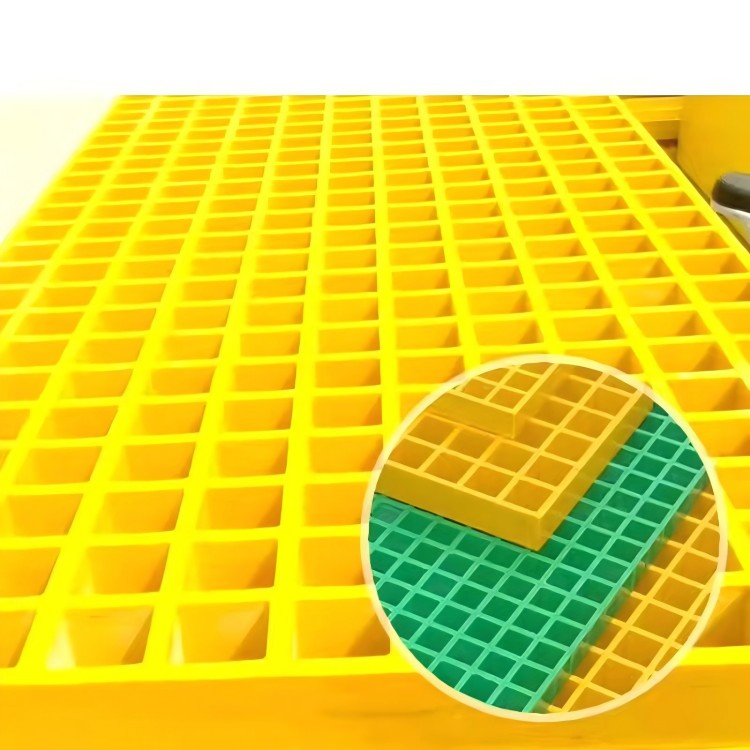
- Square Mesh: Provides true bidirectional load distribution, allowing field cuts and cutouts without losing structural support.
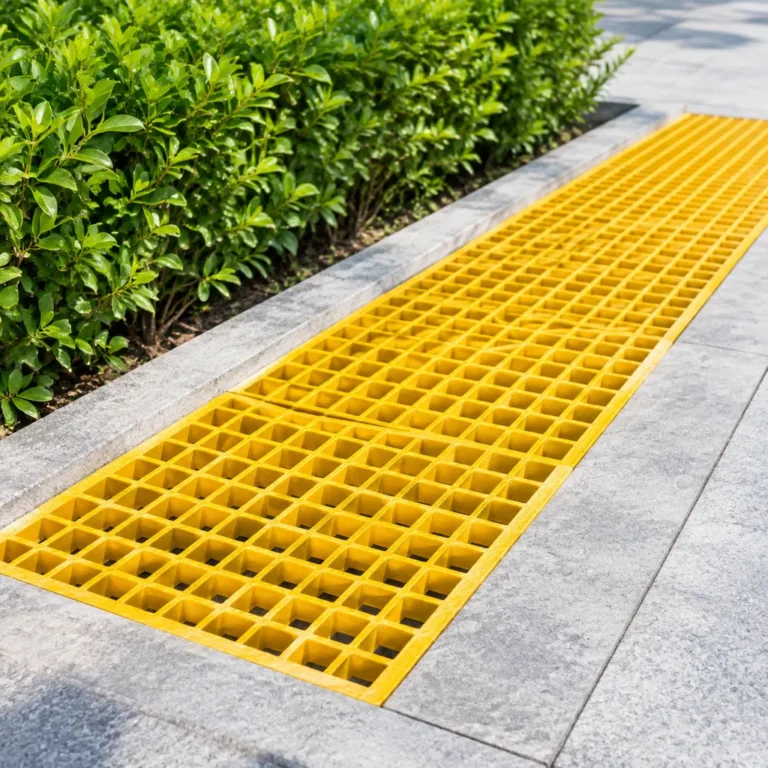
- Rectangular Mesh: Ideal for one-way spans, trench drains, and standard catwalk grating installations.
- Mini-Mesh and Micro-Mesh: Features smaller open apertures that prevent small tools or debris from falling through. These patterns are ADA-compliant and provide comfortable transit for rolling carts and pedestrian foot traffic.
| Mesh Type | Primary Advantage | Typical Application |
|---|---|---|
| Standard Square | Bidirectional strength, efficient material utilization | Walkways, platforms, general industrial flooring |
| Rectangular | High unidirectional load bearing | Trench covers, drainage channels |
| Mini-Mesh | Prevents object drop, high pedestrian safety | Elevated catwalks, docks, offshore platforms |
| Micro-Mesh | Smooth rolling surface, ADA compliance | Marinas, public access ramps, barefoot zones |
Surface Finish Options: Meniscus, Grit, and Smooth
Surface treatment directly dictates the slip resistance and maintenance profile of the installation:
- Meniscus (Concave Top): Formed naturally during the curing process, this concave profile delivers reliable slip resistance for standard wet environments without abrading footwear.
- Embedded Grit Surface: Coated with bonded quartz grit to achieve the highest level of slip resistance, making it essential for oily, greasy, or icy working conditions.
- Smooth Surface: Non-gritted finish designed for architectural screens, machine guards, or integration with solid FRP covers when containment or odor control is necessary.
Resin Formulations and Color Standards
The resin matrix determines the grating’s chemical resistance, temperature limits, and fire retardancy:
- Vinyl Ester Resin: Delivers maximum corrosion resistance against harsh acids, caustics, and aggressive chemical exposure.
- Isophthalic Polyester: The industrial benchmark for reliable chemical resistance in water treatment and coastal environments.
- Orthophthalic Polyester: An economical formulation suited for mild atmospheric conditions and general-purpose flooring.
- Phenolic Resin: Engineered for critical applications requiring maximum fire endurance and low smoke emissions.
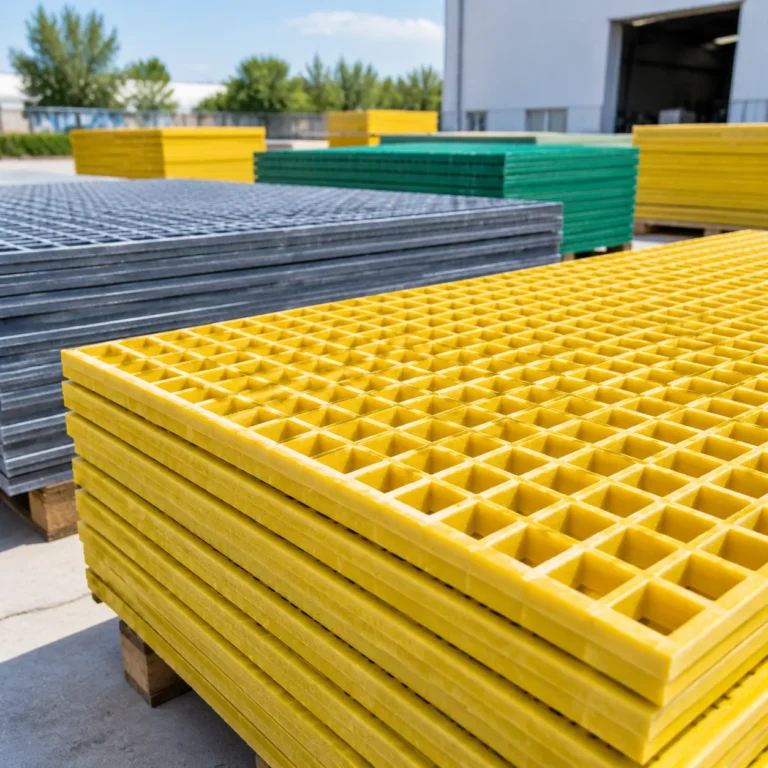
Standard stock colors include safety yellow, dark grey, light grey, and industrial green. Grating panels are easily paired with structural framing built from FRP pultruded profiles to create fully non-conductive, maintenance-free access systems.
Top Applications and Industry Uses
Molded FRP grating provides a reliable, long-lasting surface solution across demanding industrial, municipal, and commercial sectors. When standard metal grating rusts, degrades, or creates safety hazards, fiberglass reinforced plastic delivers unmatched longevity and dependable load support.
Industrial Facilities and Chemical Processing Plants
Chemical plants, plating facilities, battery manufacturing units, and paper mills operate under constant exposure to aggressive acids, alkalis, solvents, and corrosive fumes. Traditional steel grating degrades quickly in these environments, causing structural failure and costly downtime.
We supply molded FRP grating specifically designed to withstand direct chemical contact and heavy washdowns:
- Chemical Storage & Pickling Areas: Resists acid splashes, preserving structural integrity without peeling or rusting.
- Industrial Flooring & Battery Rooms: Offers high electrical insulation and non-sparking properties to protect workers in hazardous zones.
- Refineries and Petrochemical Sites: Endures harsh hydrocarbons and extreme temperature swings without warping.
If your plant deals with specific chemical exposure, you can discuss resin requirements directly with our team through our contact page to find the right formulation for your site.
Marine, Offshore, and Coastal Infrastructure
Saltwater, high humidity, and continuous UV exposure create aggressive corrosion challenges for marine structures. Molded fiberglass grating resists salt spray, standing seawater, and wave impact without corroding or deteriorating.
| Application Area | Primary Challenges | FRP Grating Solution |
|---|---|---|
| Docks, Marinas, and Piers | Constant moisture, tidal wash, and foot traffic | Long-lasting slip resistance with zero rot or rust |
| Offshore Oil & Gas Rigs | Severe saltwater exposure and heavy equipment loads | High strength-to-weight ratio and fire-retardant performance |
| Aquaculture & Fish Farms | Biological build-up, water submersion, and washdowns | Mold-resistant, easy-to-clean mesh surfaces |
Water Treatment, Drainage, and Trench Covers
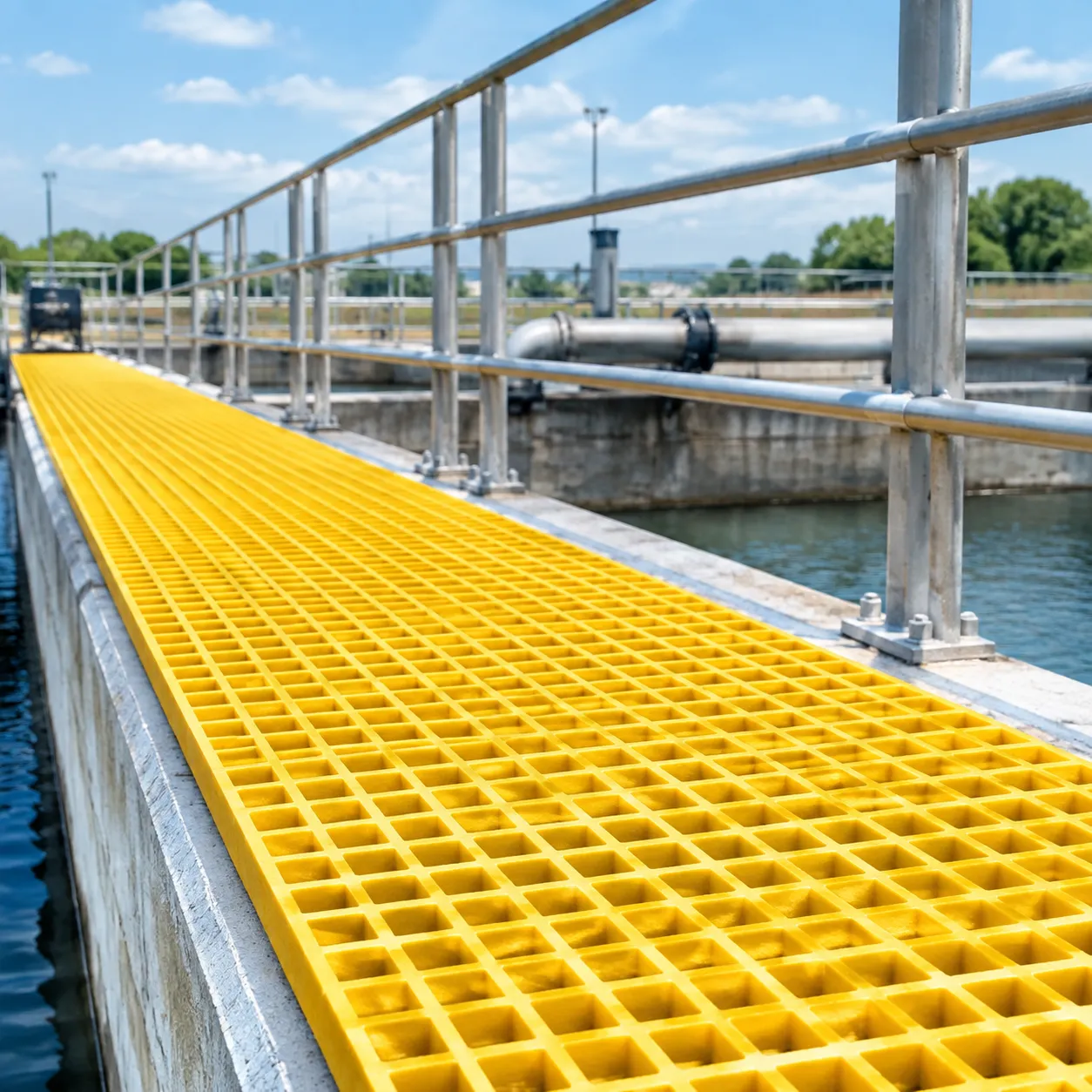
Municipal and industrial wastewater treatment plants handle constant moisture, organic waste, hydrogen sulfide gases, and aggressive cleaning chemicals. Molded FRP grating provides the ideal barrier for trench covers, sumps, and open tanks.
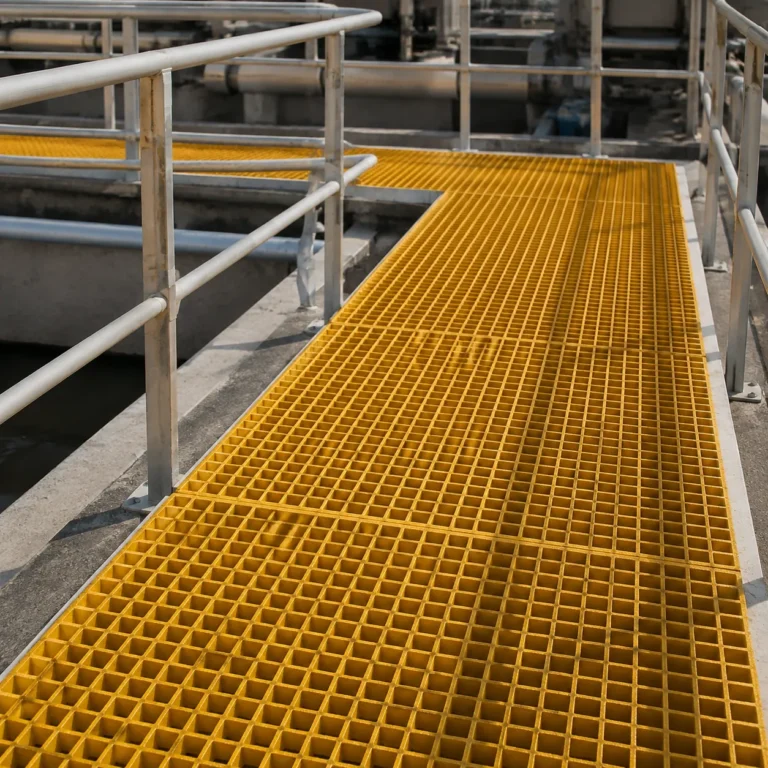
- Drainage Sumps and Trenches: Open mesh designs allow rapid liquid flow-through while supporting worker and vehicle traffic.
- Clarifier & Sedimentation Tanks: Molded panels fit around complex pipes and rounded tank perimeters without edge unraveling.
- Odor Control Covers: Handles high concentrations of sewer gases and airborne chemicals without surface degradation.
Walkways, Platforms, Catwalks, and Stair Treads
Worker safety depends on reliable footing and rigid elevated structures. Our molded FRP grating is engineered for safe foot traffic across high-elevation catwalks, access platforms, and industrial stair systems.
- Catwalk Grating: Lightweight panels make overhead installation straightforward, eliminating the need for heavy lifting machinery.
- Anti-Slip Stair Treads: Integrated grit surfaces provide traction even under greasy, oily, or wet conditions to reduce slips and falls.
- Mezzanines and Maintenance Platforms: High bidirectional strength distributes loads evenly across standard support beams.
Selection and Installation Guide
Proper selection and correct installation ensure that molded fiberglass reinforced plastic grating delivers maximum safety, structural integrity, and service life across any facility.
Evaluating Load Ratings and Span Requirements
When sizing molded panels, consider the intended traffic, maximum deflection limits, and clear support span. Molded panels distribute loads bidirectionally, but selecting adequate panel depth and clear span spacing prevents excessive deflection.
| Load Type | Typical Application | Recommended Panel Depth | Support Bearing Rule |
|---|---|---|---|
| Pedestrian Traffic | Walkways, platforms, catwalk grating | 25 mm – 38 mm (1.0″ – 1.5″) | Minimum 38 mm (1.5″) bearing surface |
| Heavy Foot / Light Cart | Industrial flooring, maintenance trenches | 38 mm (1.5″) | Minimum 40 mm – 50 mm bearing surface |
| High Load / Long Span | Chemical plant sumps, heavy service decks | 50 mm (2.0″) | Full perimeter and intermediate support |
- Always design supports to keep maximum deflection under the industry standard of 1/4 inch (6.4 mm) or L/200 for user comfort.
- Account for both uniform loads (distributed weight) and concentrated point loads (heavy equipment or foot traffic).
Choosing the Right Clips, Fasteners, and Accessories
Secure panel hold-down prevents shifting, vibration, and rattling under industrial traffic. At LeiHong Fiberglass, we provide standard stainless steel mounting hardware engineered for aggressive, corrosive environments.
- M-Clips: Position over two adjacent load-bearing bars to anchor the panel directly to the support structure.
- C-Clips: Join two un-supported adjacent panel edges to eliminate differential deflection between panels.
- L-Clips: Fasten light-duty grating to support angles for moderate loading conditions.
- G-Clips: Clamp directly to the support flange without requiring drilling into structural steel.
- Material Grade: Always select 304 or 316 stainless steel hardware to match the corrosion resistance of your FRP layout.
Fabrication, Cutting, and Installation Best Practices
Field-cutting and installing molded FRP panels requires standard tools and straightforward safety precautions:
- Cutting Tools: Use a circular saw, jigsaw, or angle grinder fitted with a diamond-tipped masonry blade or carbide blade for clean, straight cuts.
- PPE Requirements: Always wear a dust mask or respirator, safety glasses, hearing protection, and gloves to protect against composite dust during cutting.
- Edge Sealing: Coat all field-cut edges and drilled holes with a compatible resin sealing kit to preserve chemical resistance and prevent moisture ingress.
- Clearance Gaps: Allow a 3 mm to 6 mm (1/8″ to 1/4″) expansion and clearance gap between adjacent panels and around fixed equipment penetrations.