FRP Grating Advantages and Disadvantages Guide
Are you evaluating FRP grating for a corrosive, demanding, or weight-sensitive application?
Choosing the right fiber reinforced polymer (FRP) means understanding more than its strength and durability. You also need to consider stiffness, temperature limits, UV aging, cost, repair requirements, and the tradeoffs between GFRP, CFRP, and AFRP materials.
This guide breaks down the real advantages and disadvantages of FRP material so you can select, design, and maintain an FRP grating solution that performs reliably over time.
What is FRP Material?
Definition and Basic Composition
FRP material, or fiber reinforced polymer, is a composite material made by combining reinforcing fibers with a polymer resin matrix. The fibers provide structural strength, while the resin binds the fibers together, protects them, and helps form the required shape.
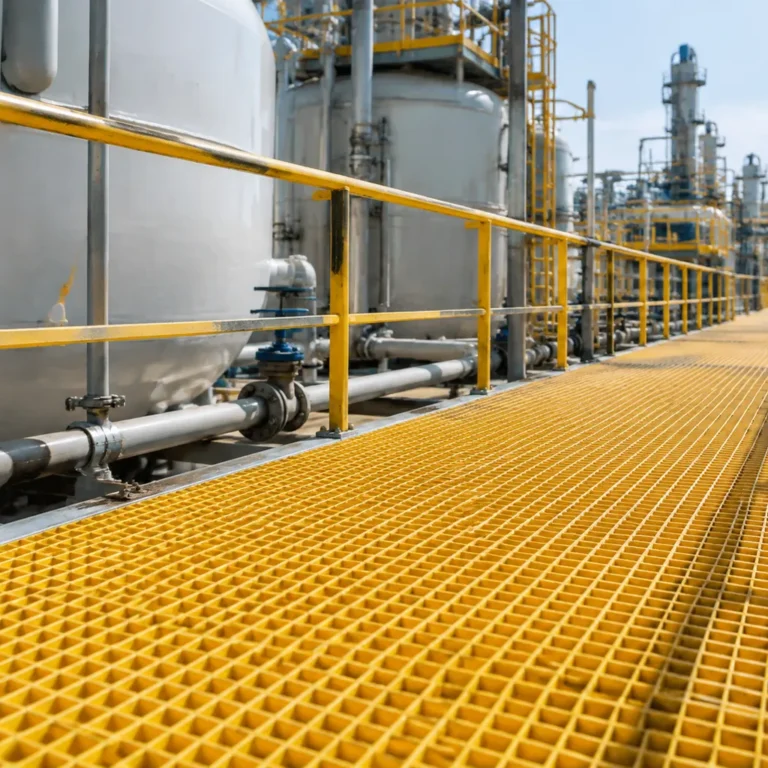
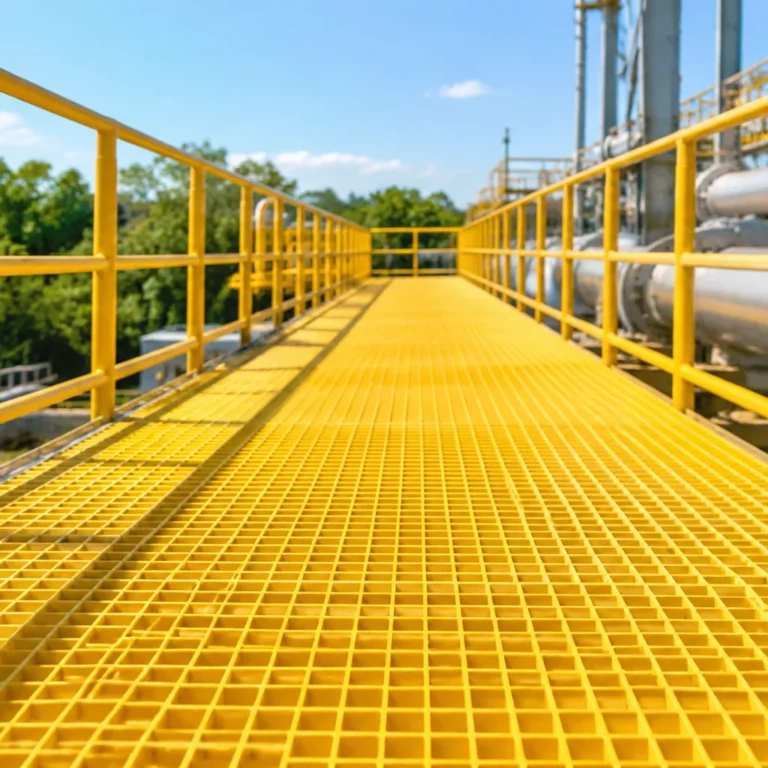
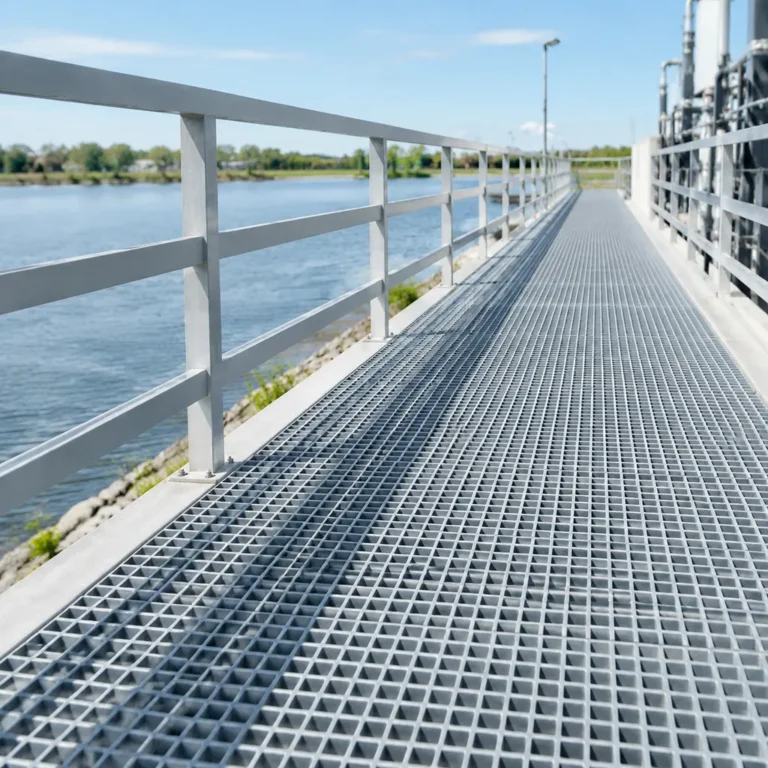
For industrial applications, FRP grating is commonly produced with glass fiber reinforcement and resin systems selected for the operating environment. The result is a lightweight, corrosion-resistant material suitable for walkways, platforms, trench covers, stairs, and maintenance areas.
Common Types of FRP Composites
FRP composites are generally classified by their reinforcing fiber:
- Glass Fiber Reinforced Polymer (GFRP): A practical choice for industrial grating, structural profiles, ducts, covers, and corrosion-resistant equipment.
- Carbon Fiber Reinforced Polymer (CFRP): Uses carbon fiber where high strength and stiffness are required.
- Aramid Fiber Reinforced Polymer (AFRP): Uses aramid fibers for applications requiring specialized impact-related performance.
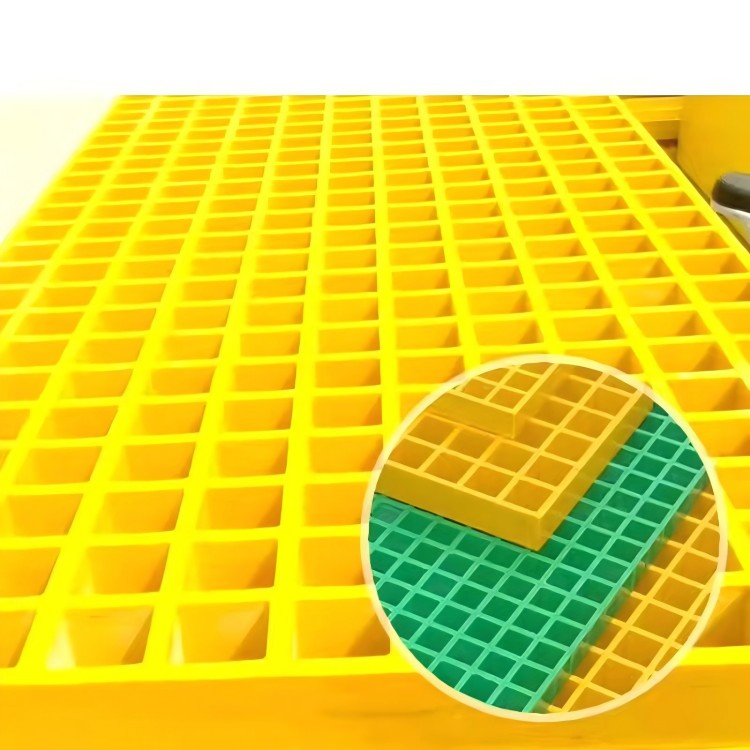
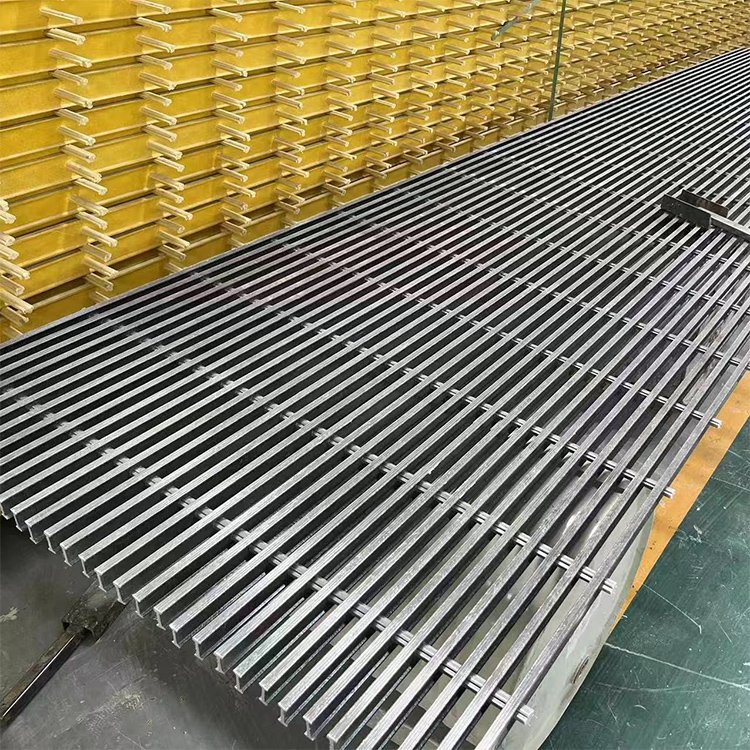
For FRP grating, glass fiber composites are widely used because they can be moulded or pultruded and matched with resin options such as vinyl ester, isophthalic, or orthophthalic resin.
Brief Overview of FRP Material Advantages
High Strength-to-Weight Ratio
Our FRP grating provides a high strength-to-weight ratio for industrial access areas. It is lightweight for handling and installation while supporting practical use on walkways, platforms, stairs, and trench covers. This can reduce handling demands compared with heavier traditional materials.
Corrosion and Chemical Resistance
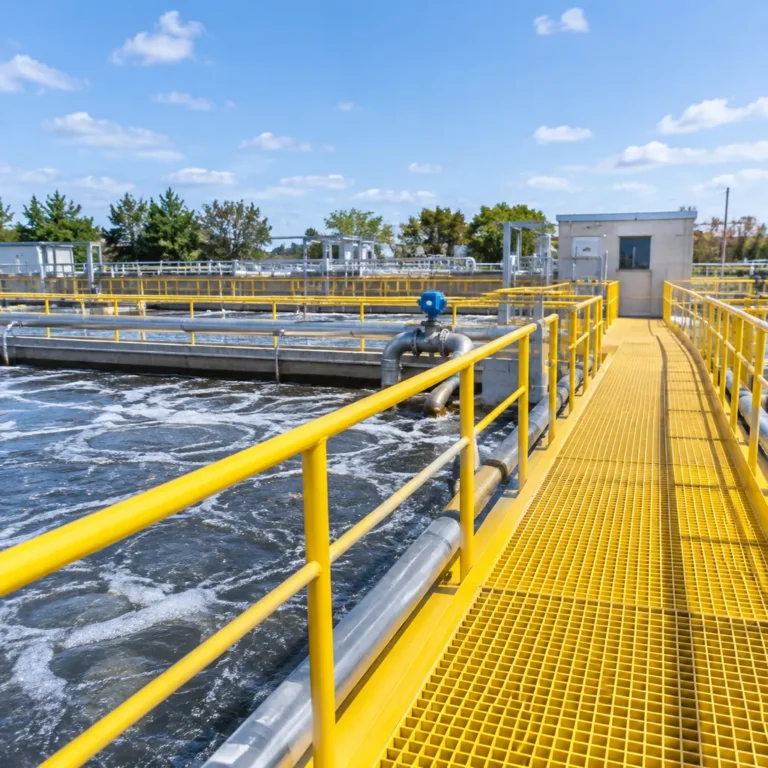
FRP material is well suited to corrosive and wet operating environments. We select resin options, including vinyl ester, isophthalic, and orthophthalic resin, according to the application. This supports FRP grating use in wastewater treatment, chemical processing, mining, municipal engineering, and industrial facilities.
Design Flexibility and Durability
We manufacture moulded and pultruded fiberglass grating to project drawings, dimensions, and layout needs. Available fabrication includes cutting, drilling, assembly, and surface finishing for compatibility with structural profiles, covers, and support structures.
Key working benefits include:
- Slip-resistant surfaces for maintenance access
- Non-conductive material properties
- Weather-resistant and UV-resistant performance
- Flame-resistant options where required
- Custom panel sizes and connection details
Key Disadvantages and Limitations of FRP Material
FRP material offers strong corrosion resistance and low weight, but its limits must be considered during engineering and material selection. For FRP grating, covers, ducts, and structural components, load conditions, operating temperature, sunlight exposure, and end-of-life handling all affect long-term performance.
Lower Modulus of Elasticity and Stiffness
FRP has a lower elastic modulus than steel. It can flex more under the same load, especially across longer spans. FRP grating and support structures must therefore be designed with appropriate panel thickness, support spacing, and structural profiles.
Key considerations include:
- Deflection under pedestrian, equipment, or maintenance loads
- Span length and support layout
- Concentrated loads around access points and equipment
- Proper matching of grating panels with FRP supports
Thermal and Temperature Sensitivity
Composite materials can respond differently to heat than metal. High operating temperatures may affect the resin matrix, while repeated temperature changes can place stress on the laminate structure and connections.
For industrial FRP applications, we review:
- Operating temperature range
- Chemical exposure combined with heat
- Flame-resistance requirements
- Expansion and connection details between FRP components
Resin selection is important. Vinyl ester, isophthalic, and orthophthalic resin systems should be matched to the actual project environment.
UV Degradation and Environmental Aging
Long-term outdoor exposure can cause ultraviolet degradation on unprotected FRP surfaces. Sunlight, moisture, weather cycles, and airborne industrial contaminants may gradually affect surface appearance and the resin layer.
For outdoor FRP grating, covers, and kiosks, practical protection can include:
- UV-resistant resin systems
- Suitable surface finishing
- Project-specific material selection
- Regular inspection of exposed surfaces and connections
A well-matched laminate and resin system helps maintain weather resistance in municipal, mining, wastewater, and industrial facilities.
Recyclability and Environmental Impact
FRP is a durable composite material, but it is more difficult to recycle than single-material metals. Glass fiber and cured resin are bonded together, which makes separation and reuse more complex at the end of service life.
This limitation makes correct design and manufacturing important from the start. Custom dimensions, controlled fabrication, and quality inspection help reduce unnecessary material waste. Durable FRP grating and structural components can also reduce replacement frequency in corrosive environments where conventional materials may require more frequent maintenance.
Economic and Practical Challenges of FRP Grating
Higher Initial Material Costs
FRP grating can have a higher initial cost than conventional materials because resin selection, fiberglass reinforcement, molding, pultrusion, and custom fabrication must match the project environment. For corrosive wastewater, chemical, mining, or municipal applications, we select suitable resin and laminate structures based on the operating conditions.
The upfront investment should be reviewed alongside installation, maintenance, corrosion exposure, and replacement requirements. Custom panel sizes, cutouts, drilling, and support details can also affect the final project quote.
Complex Repair and Inspection Processes
FRP grating requires proper inspection of dimensions, thickness, surface condition, and structural condition before delivery and during service. Damage may not always be assessed in the same way as steel, especially where the fiberglass laminate, resin surface, or slip-resistant finish is affected.
For project-specific assemblies, we support quality checks that may include:
- Dimension and thickness inspection
- Surface and structural checks
- Trial assembly when required
- Review of cutouts, supports, and connection details
Repair work should match the original resin system and laminate design to maintain the intended corrosion resistance and mechanical performance.
Manufacturing and Fabrication Constraints
FRP grating performance depends on the correct production method and fabrication control. Moulded and pultruded FRP grating have different structural characteristics, so the selection should reflect span, loading direction, access requirements, and installation layout.
Custom fabrication needs accurate drawings for panel dimensions, openings, edge cuts, drilling locations, and support arrangements. We provide drawing-based OEM production, including cutting, drilling, assembly, and surface finishing, to help ensure the finished FRP grating fits the wider platform, walkway, trench cover, stair, or maintenance-area system.
Disadvantages by FRP Material Type
Limitations of Glass Fiber Reinforced Polymer (GFRP)
Glass fiber reinforced polymer is widely used for FRP grating, covers, ducts, and structural profiles because it balances strength, corrosion resistance, and cost. However, GFRP has a lower elastic modulus than steel, so long spans can flex more under load. Proper panel thickness, support spacing, and resin selection are essential for industrial walkways and platforms.
GFRP can also lose surface appearance or performance after extended ultraviolet exposure without suitable UV protection. Its chemical resistance depends on the resin system, so the material must match the actual operating environment.
Limitations of Carbon Fiber Reinforced Polymer (CFRP)
Carbon fiber reinforced polymer offers high strength and stiffness, but its initial cost is generally higher than glass fiber composite materials. This can limit its use in cost-sensitive municipal, wastewater, and general industrial projects.
CFRP is conductive, unlike standard fiberglass FRP grating. Where electrical insulation is required, carbon fiber may not be the appropriate reinforcement. Repair and inspection can also require specialized experience because damage may occur beneath the visible surface.
Limitations of Aramid Fiber Reinforced Polymer (AFRP)
Aramid fiber reinforced polymer is valued for impact resistance and low weight, but it can be more difficult to cut, drill, and finish than common fiberglass materials. Moisture exposure and ultraviolet degradation can affect long-term performance when the laminate is not properly protected.
For industrial FRP applications, AFRP may also offer less practical value where corrosion resistance, fabrication flexibility, and project-based cost control are the main requirements. Material selection should always consider load conditions, exposure, fabrication needs, and the full FRP system design.
How to Overcome FRP Material Disadvantages
Protective Coatings and UV Additives
We protect FRP grating and other fiberglass components with suitable surface finishes, protective coatings, and UV-resistant additives where outdoor exposure is expected. These measures help reduce ultraviolet degradation, surface aging, and moisture-related wear. Resin selection should also match the chemical environment, temperature, and weather conditions at the installation site.
Hybrid Composite Designs and Material Selection
We select the resin system and laminate structure according to each working condition. Vinyl ester resin can suit aggressive chemical environments, while isophthalic and orthophthalic resin options can support industrial, municipal, and standard structural applications. For demanding projects, FRP grating can be combined with compatible structural profiles, supports, covers, and connection details to improve overall system performance.
Proper Maintenance and Structural Engineering
Good engineering reduces many practical FRP material limitations. We review drawings, dimensions, span requirements, support spacing, openings, and load conditions before production. Proper installation and routine inspection help identify surface damage, loose fixings, or changes in operating conditions early. Dimension, thickness, surface, and structural checks, with trial assembly when required, help ensure that custom FRP grating fits the intended application.