Hebei Leihong FRP Technology Co., Ltd.
FRP Solutions for Industrial Facilities
Specify fiberglass grating, pultruded profiles, trench covers, tanks and scrubber towers for corrosive industrial settings. We review loading, chemical exposure and installation details before proposing a product combination.
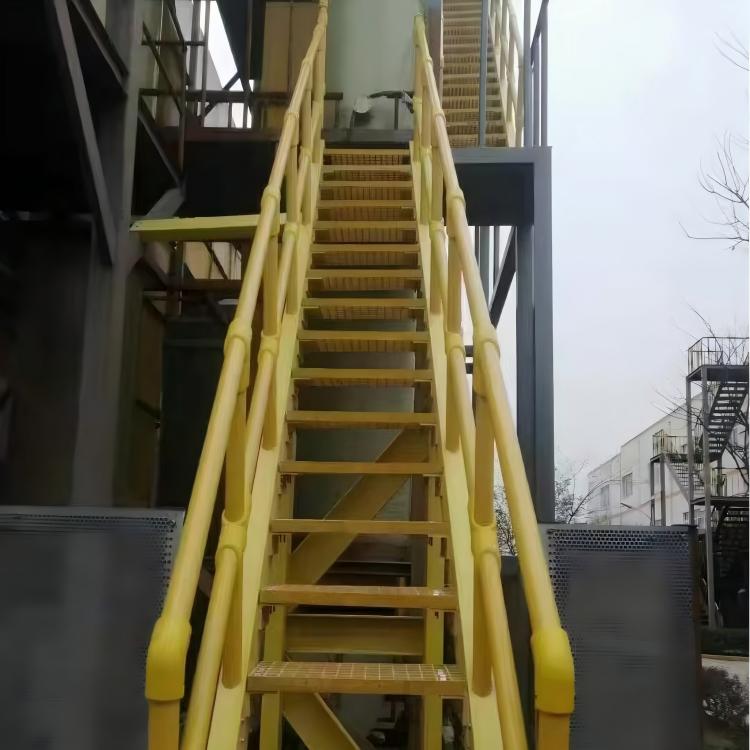
Material decision
Address Corrosion and Access Needs at the Source
In chemical plants and wet process facilities, each component faces a different combination of loads, chemicals, traffic and maintenance. Compare complete assemblies for the actual duty.
Common site challenges
- Corrosive exposure
- Coatings and metal grades can degrade in incompatible media.
- Heavy components
- Handling and replacement can affect installation logistics.
- Electrical areas
- Conductive materials can be unsuitable for some applications.
- Repeated maintenance
- Repair access and downtime can drive project cost.
How FRP can help
- Resin selection
- Choose a formulation for the exact chemical, concentration and temperature.
- Lower handling weight
- Many FRP products are easier to move than comparable steel assemblies.
- Electrical properties
- Ask for tested data where nonconductive behavior is specified.
- Project specific design
- Plan spans, fixings, access and inspection around the installation.
Service life and total cost savings depend on the exact product, environment and maintenance plan. FRP is not inherently antistatic or approved for hazardous areas.
Product combinations
FRP Components for Industrial Sites
Select individual components or discuss a coordinated supply package for a platform, trench, storage area or exhaust system.
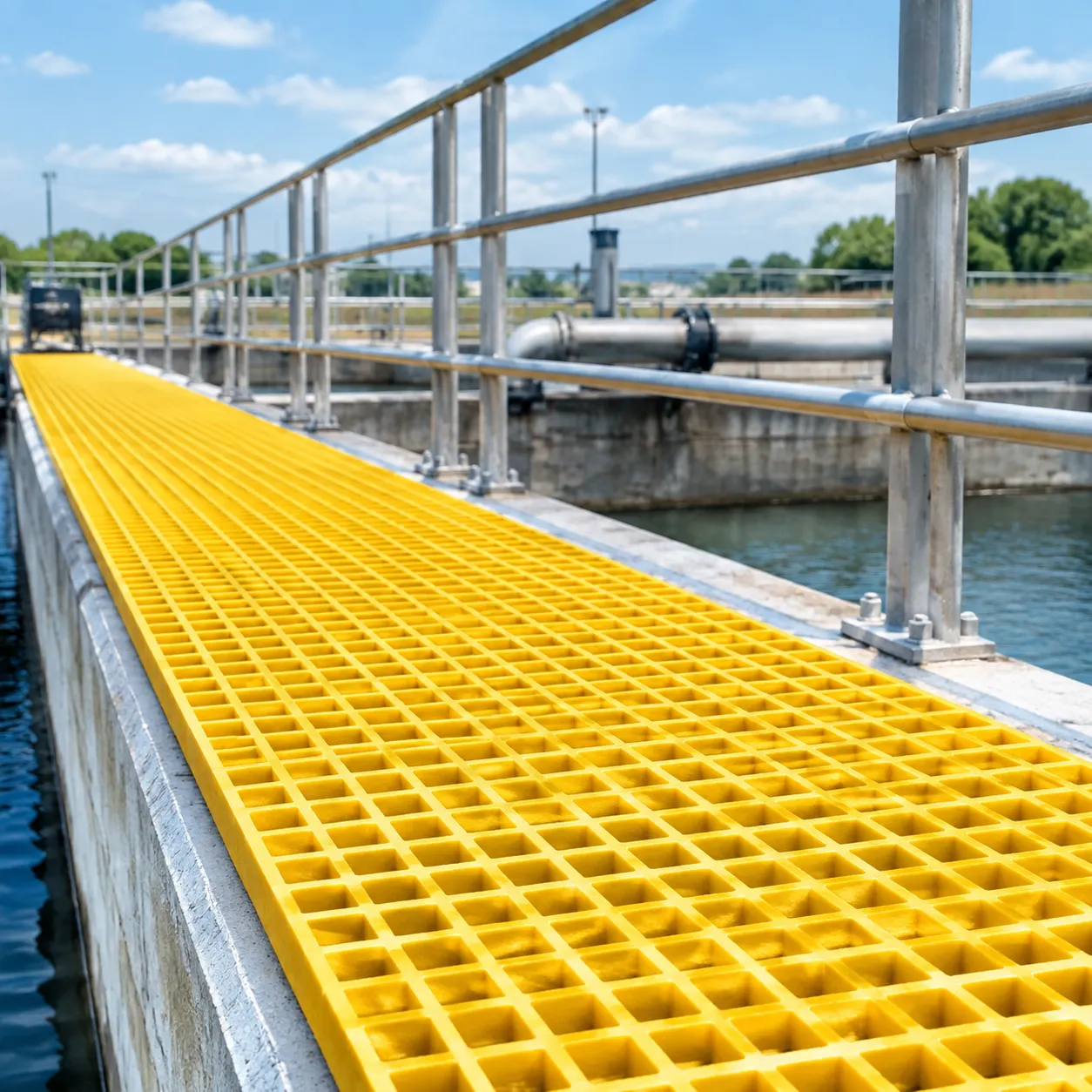
FRP Gratings
Molded or pultruded options for walkways and access platforms. Specify loading, span, resin, mesh and traction.
View grating →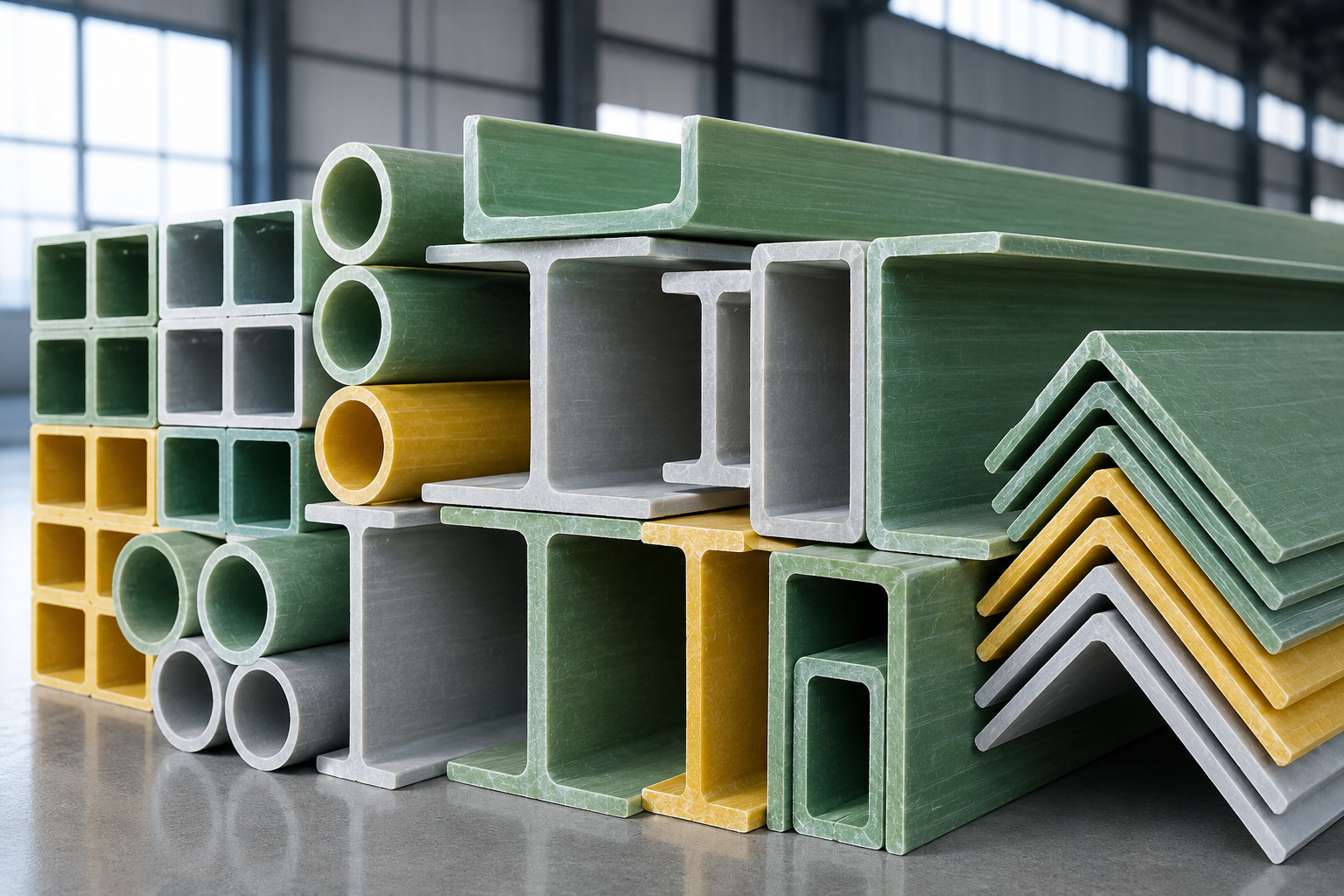
Pultruded Profiles
Beams, channels, tubes and angles for engineered frames, rails and support members.
View profiles →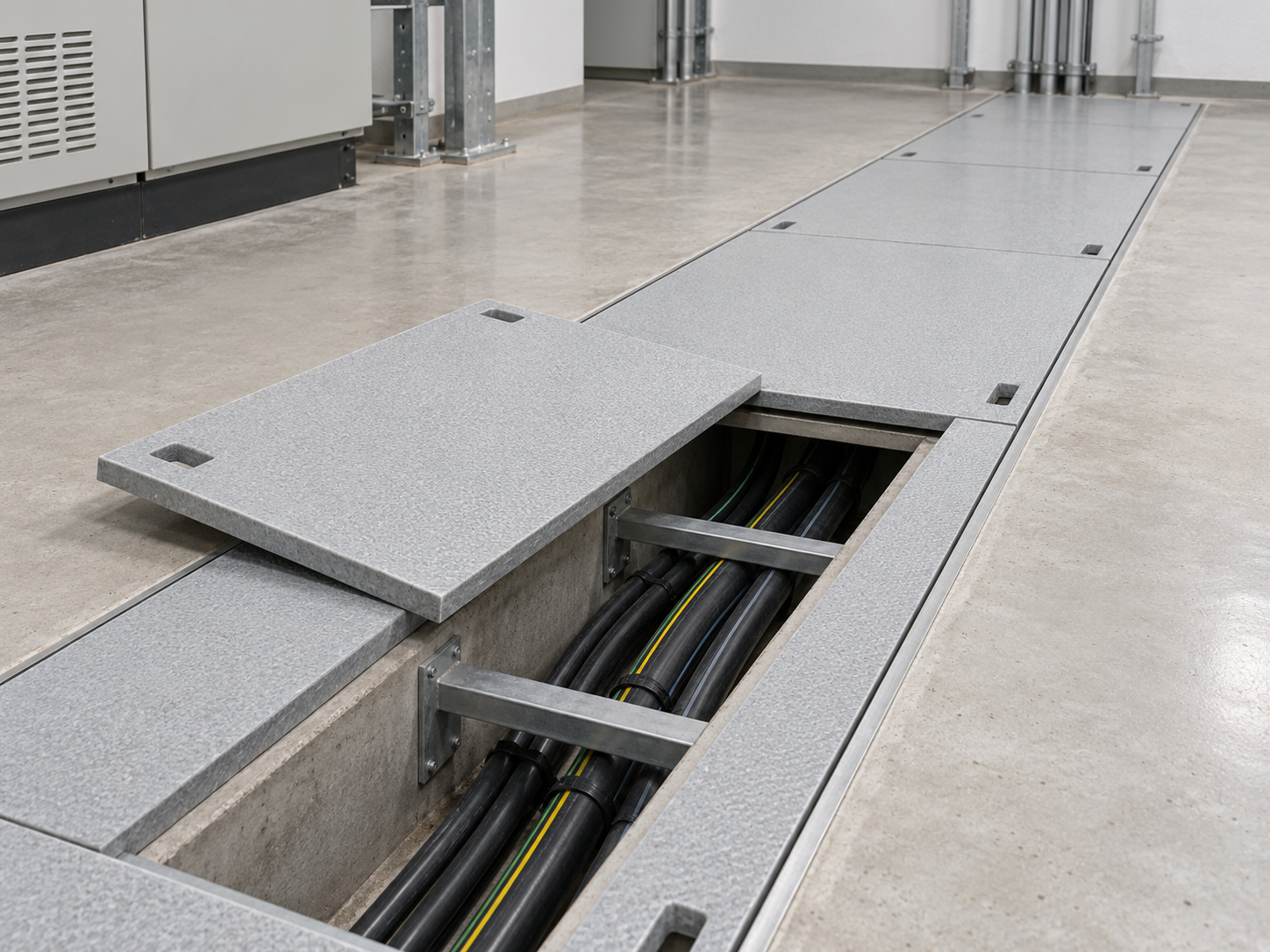
FRP Covers
Trench, channel and enclosure covers sized for access, chemical exposure and the support assembly.
View covers →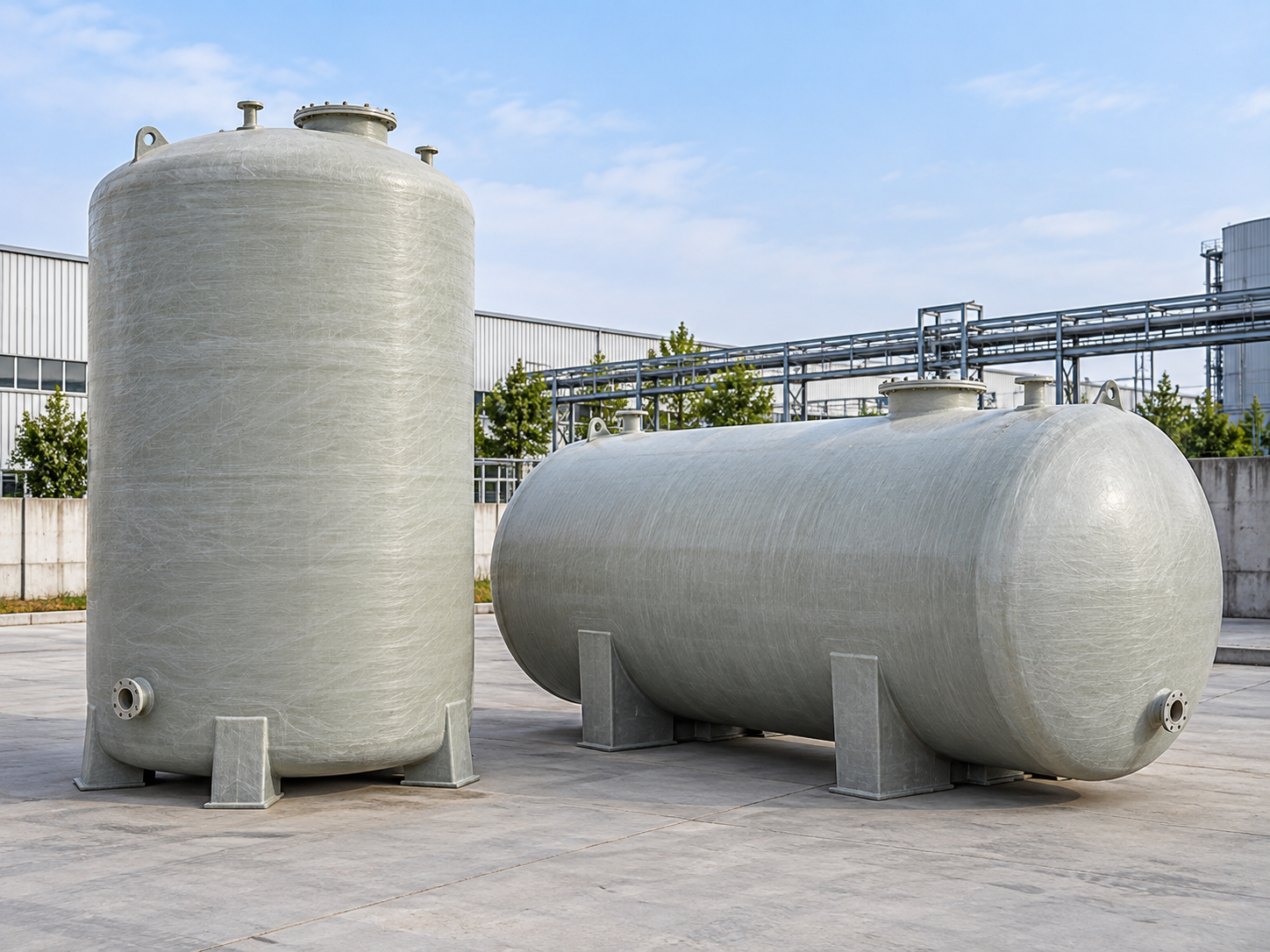
Tanks & Scrubbers
Fiberglass equipment for specified liquid storage or exhaust washing duties.
View scrubbers →Industrial applications
Match Components to the Working Environment
Choose a sector to see a practical starting combination. Actual construction follows your approved design requirements.
Chemical Processing
Specify compatible materials for acidic or alkaline exposure around access platforms, trenches, storage and exhaust collection.
Possible combination: FRP grating, support profiles, trench covers, tanks and scrubber towers.
Discuss this project →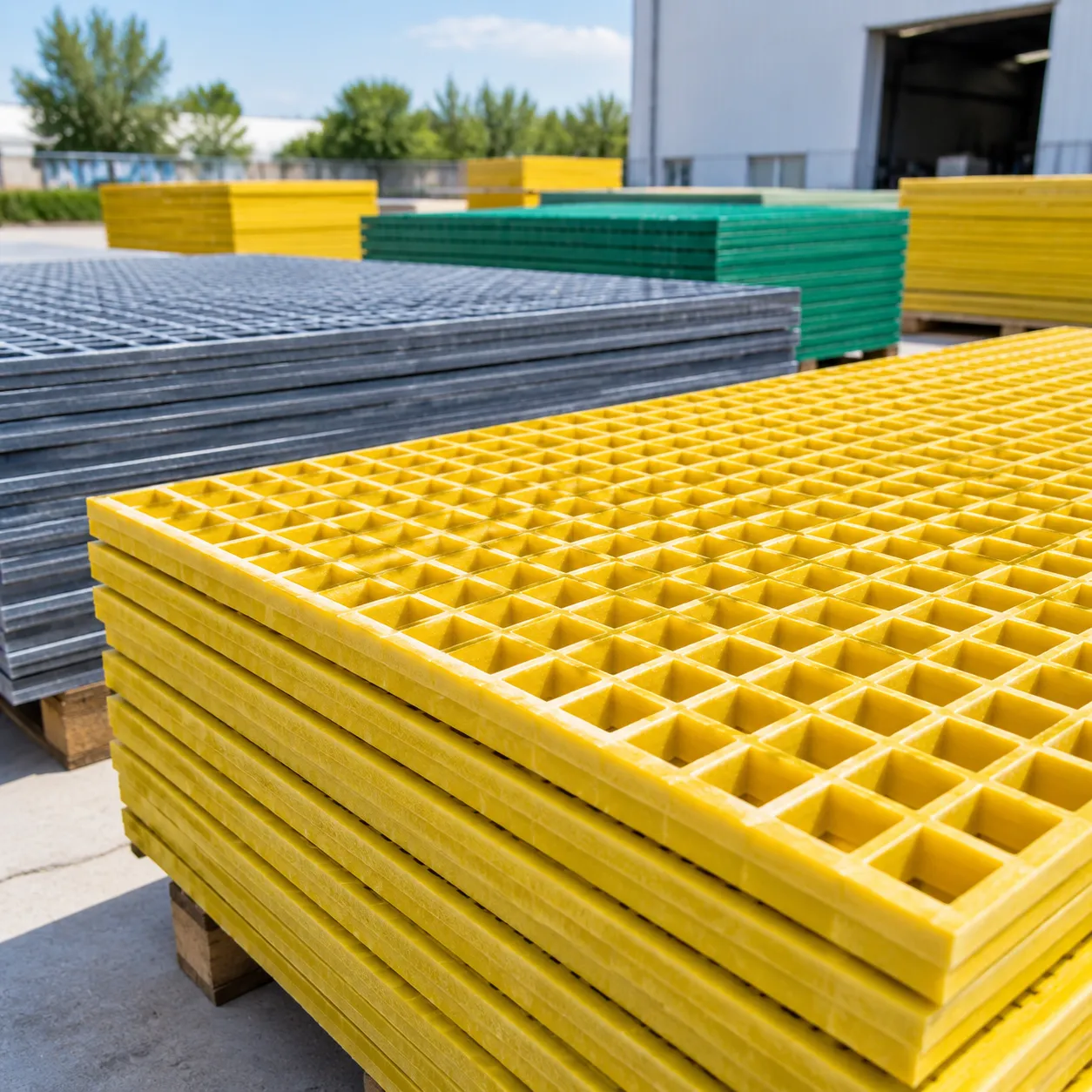
Electroplating & Metal Finishing
Review splash exposure, washdown, surface traction and support layouts around process lines.
Possible combination: chemical resistant grating, rail profiles and drainage covers.
Discuss this project →Power & Utility Facilities
Assess tested electrical properties and local safety requirements for access and protective components.
Possible combination: profiles, cable trench covers and grating.
Discuss this project →Paper, Textile & Wet Process Plants
Plan pedestrian access where humidity, washdown and slipping risks affect selection.
Possible combination: grating walkways, support members and channels.
Discuss this project →Engineering information
Specify and Verify the Required Performance
Product datasheets and test evidence should match the proposed construction. A site wide claim cannot establish every product's load, fire, chemical or electrical rating.
Mechanical design
- Clear span and support direction
- Point, distributed and dynamic loads
- Allowable deflection and fixings
- Product specific load tables
Exposure & safety
- Chemical, concentration and temperature
- Resin compatibility evidence
- Fire test method and classification
- Slip and electrical test requirements
Procurement documents
Share the drawing, required standard, test methods, inspection scope and document list. Ask for evidence for the exact product before specifying a certification.
Fabrication workflow
From Industrial Drawings to Site Components
Define product requirements and agree the supply scope before production.
Review conditions
Confirm medium, loads, temperature and site drawings.
Approve selection
Review resin, dimensions, section and panel layout.
Fabricate details
Discuss cutouts, drilling, edge treatment and fittings.
Inspect & pack
Check agreed dimensions and tests, then identify parts for transport.
Support installation
Provide drawings or guidance within the agreed project scope.
FAQ
Industrial FRP Selection Questions
Molded or pultruded grating for a plant walkway?
Both may work. Molded grating carries in two directions; pultruded designs usually have a primary span direction. Compare the exact load tables, support layout, cutouts and deflection requirements.
Will FRP age outdoors or in acid mist?
Long term performance depends on resin, finish, UV exposure, chemical medium and inspection. Provide the site conditions and request relevant product evidence rather than relying on a universal lifespan.
Can grating be cut around pipes on site?
Many panels can be cut with suitable tools and dust protection. Confirm edge sealing, remaining support and clip positions after any opening is made.
Is FRP flame retardant and antistatic?
Only a specific tested formulation may satisfy a stated fire or static requirement. Standard FRP is not automatically antistatic; obtain test reports for the proposed product and intended safety classification.
What are the minimum order and lead time?
Availability depends on resin, color, section, tooling, machining and quantity. Send the bill of materials for a project specific quotation and production schedule.
Request a project quotation
Plan Your Industrial FRP Project
Send the industrial application, service medium, loads, dimensions and estimated quantity to Hebei Leihong FRP Technology Co., Ltd. Include CAD or PDF drawings if available so the team can review an appropriate product combination.
- FRP grating, covers, profiles and equipment
- Drawing based fabrication discussion
- Project specific technical and commercial scope