Hebei Leihong FRP Technology Co., Ltd.
Custom FRP Storage Tanks for Industrial and Water Treatment Projects
Vertical, horizontal and project specific fiberglass tanks designed around your stored medium, capacity, temperature, connections and site conditions. Send your tank specification or drawings for review.
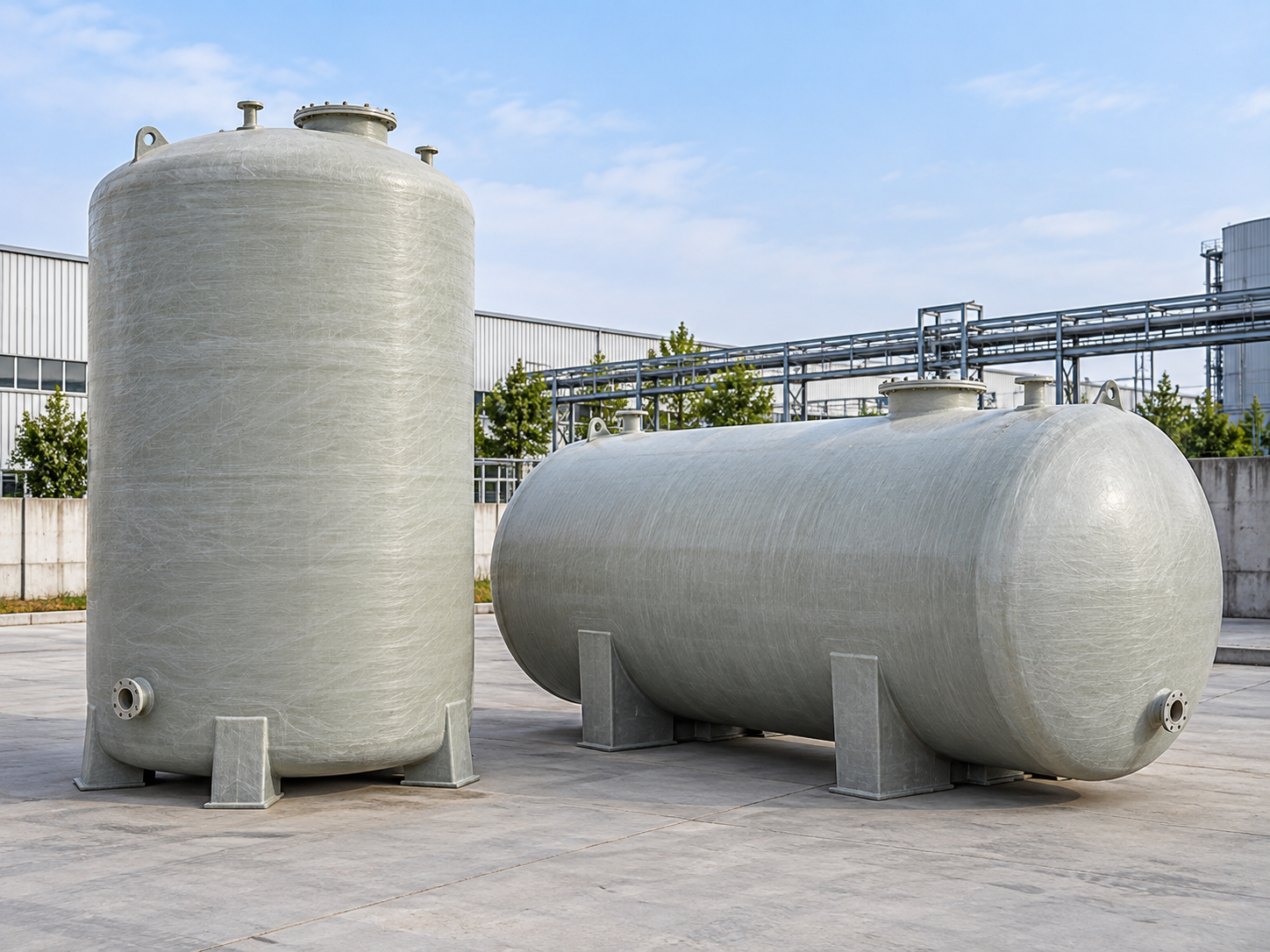
Tank configurations
FRP Storage Tank Options
We review the design according to the site footprint, transport route, stored medium and structural requirements.
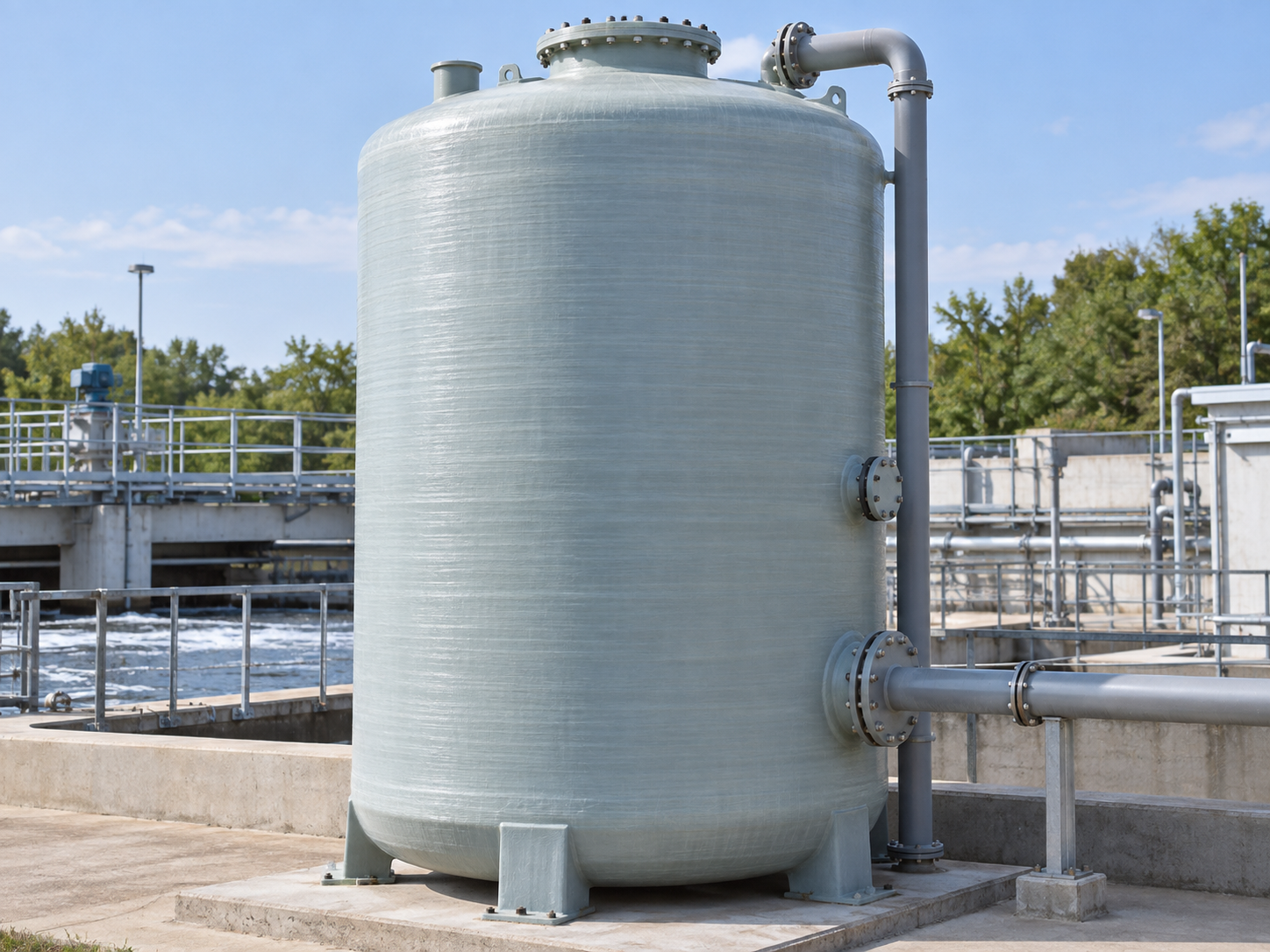
Vertical FRP Tanks
Ground mounted vertical tanks with project specific base, roof, access and nozzle layout.
Review specifications →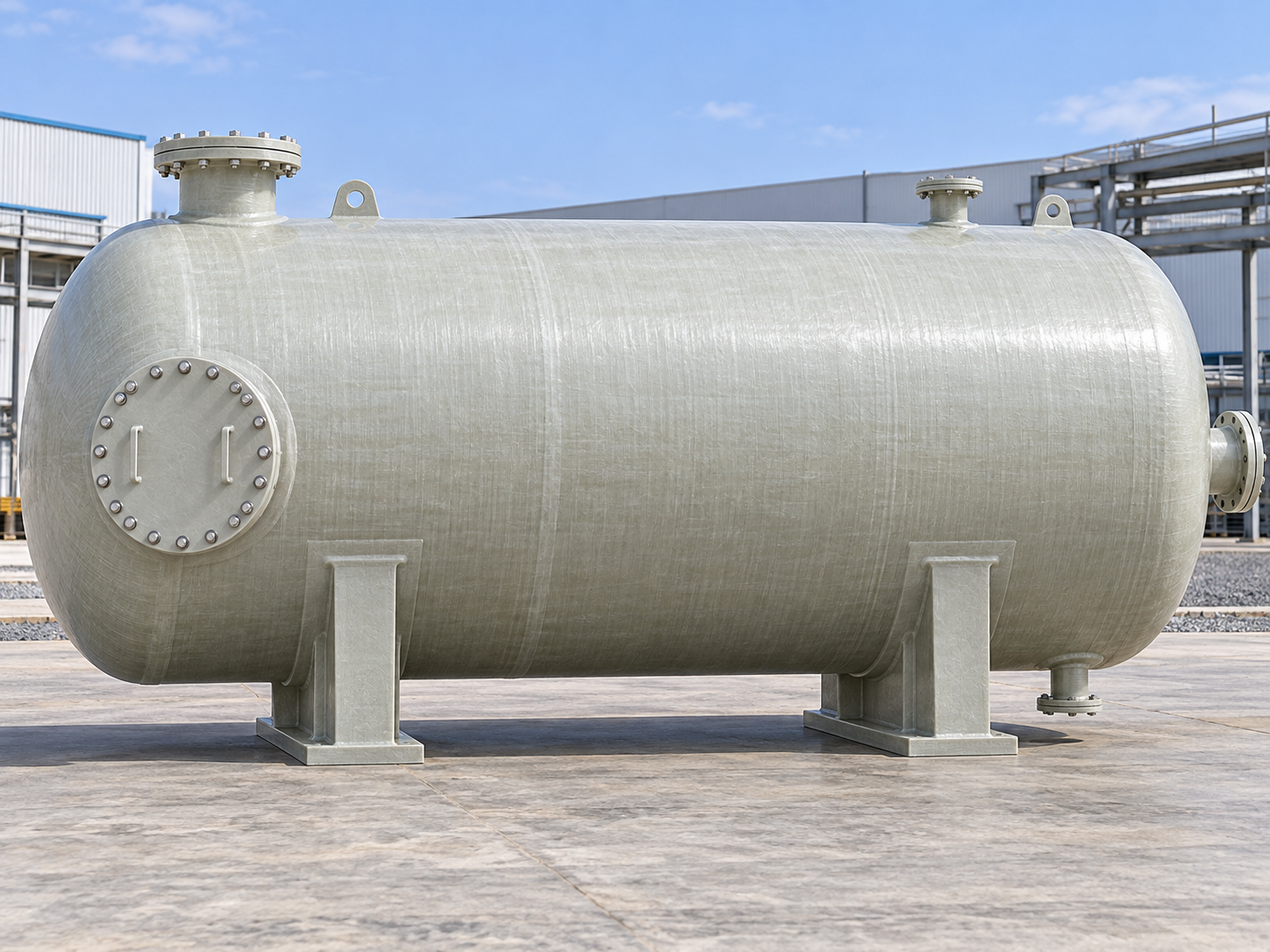
Horizontal FRP Tanks
Horizontal configurations with engineered saddles for sites with height or layout constraints.
Review specifications →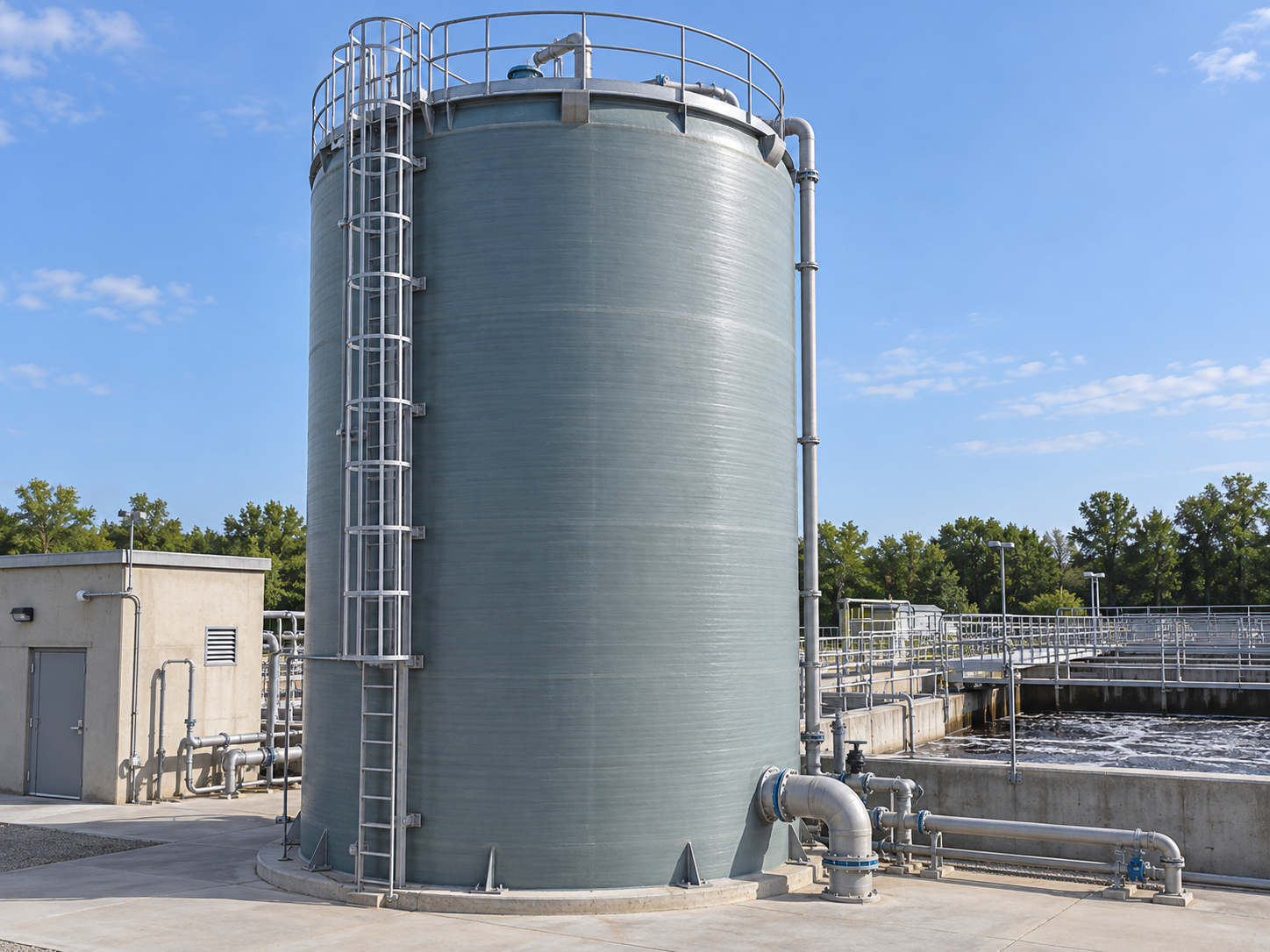
Large Project Tanks
For tanks exceeding ordinary transport limits, discuss feasible fabrication and installation methods.
Discuss your site →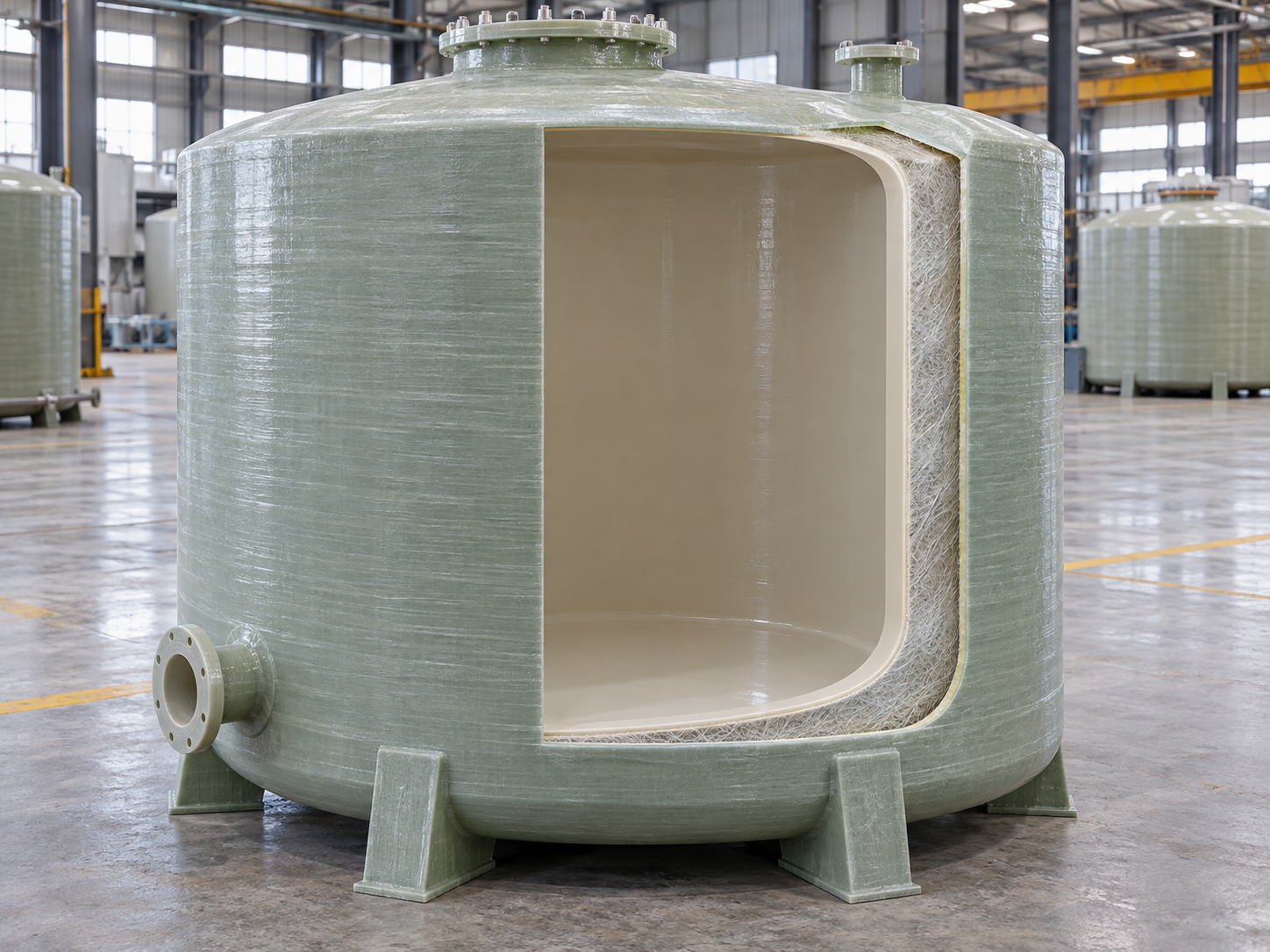
Special Liner Options
Discuss compatible inner barrier or dual laminate construction when the application requires it.
Review the medium →Construction concept
How a Fiberglass Tank Is Built
A tank laminate is designed for its chemical exposure and structural loads. The actual layer sequence and thickness are specified for each design.
Inner corrosion barrier
The wetted surface is designed for the specific chemical and temperature. Material selection, surface integrity and fabrication details must be confirmed.
Transition laminate
Intermediate layers connect the inner barrier with structural reinforcement as required by the specified laminate design.
Structural reinforcement
Fiber orientation and wall construction are determined by liquid head, external loads, supports and the applicable design method.
Exterior protection
Finish, sunlight exposure and weather conditions inform any exterior protection specified for the tank.
Layer resin percentages and leak tightness are design and test matters, not universal guarantees.
RFQ specification
Technical Parameters to Confirm Before Quotation
Capacity, diameter, pressure and temperature ranges depend on tank construction, material, transport and applicable design rules. Provide the following details for a meaningful proposal.
| Parameter | What to provide |
|---|---|
| Stored medium | Chemical name, concentration, impurities, SDS and cleaning chemicals |
| Volume & geometry | Working and total volume, diameter or footprint, height limit |
| Operating conditions | Continuous and peak temperature, internal/external pressure and fill cycles |
| Nozzles & access | Flange size, position, manway, vent, drain and instrumentation |
| Site conditions | Indoor/outdoor, wind, seismic basis, foundation, transport limits |
| Design documentation | Required standard, drawings, inspection and test requirements |
Applicable standards such as ASTM D3299 or EN 13121 must be stated in the contract and verified for the proposed design. A chemical SDS alone does not prove long term liner compatibility.
Applications
Storage Applications by Operating Medium
Examples below describe inquiry types. Resin compatibility must be checked for the exact concentration, temperature, impurities and service conditions.
Acids, Alkalis & Process Liquids
Provide the chemical specification for liner and laminate review, especially for oxidizers and mixed streams.
Discuss the medium →Industrial Wastewater
Equalization, dosing and effluent storage applications with variable constituents and cleaning conditions.
Discuss the process →Scrubber System Liquids
Holding and circulation tank options for project specific scrubber chemicals and piping connections.
Discuss the system →Process Water & Collection
Material cleanliness and chemical compatibility must be defined for sensitive process streams.
Discuss purity needs →Water Storage
Storage designs reviewed around water quality requirements, volume, location and connections.
Discuss tank sizing →Regulated Service
Food, potable water and pharmaceutical use requires specific material certifications and approvals; confirm these before specifying.
Ask about documentation →Manufacturing & inspection
Plan Quality Checks Around the Tank Specification
Inspection methods and acceptance criteria should be agreed for each tank. Test frequency, water filling and reports depend on the design, applicable standard and site constraints.
Review incoming materials
Confirm resin, reinforcement and traceability documents against the order.
Inspect the inner surface
Review liner finish and the applicable pinhole or visual test method.
Check construction
Measure agreed dimensions, wall construction and cure indicators.
Test before dispatch
Perform the approved inspection and leakage test scope, then record results.
Project planning
Common Tank Project Requirements
These scenarios are illustrative. Replace them with named, documented Leihong projects only when photographs, quantities and performance records are available.
Multi Tank Storage Area
Coordinate media, capacities, nozzle orientation, access and foundation details across a group of tanks.
Large Volume Process Tank
Check transport constraints, site access, structural loads and the installation sequence early.
Temperature Sensitive Medium
Include thermal cycling, insulation, support and cleaning conditions in the specification.
Replacement Tank
Measure footprint, existing connections and lifting access before finalizing dimensions.
FAQ
FRP Tank Selection and Maintenance Questions
When is FRP preferable to a metal storage tank?
FRP may be suitable where a compatible resin system and lower handling weight matter. Compare the complete tank designs for chemical resistance, load, maintenance and cost. No material is suitable for every chemical.
How do I choose a resin for a chemical?
Provide chemical name, concentration, contaminants, continuous and peak temperatures, plus cleaning chemicals. Verify the proposed liner against manufacturer compatibility information and design requirements.
What foundation does an FRP tank need?
The tank designer should specify base flatness, bearing, support and anchoring for the full tank weight and site loads. Vertical and horizontal tanks need different support details.
Can nozzle positions and manways be customized?
Yes, review sizes, orientations, elevations and reinforcement on approved drawings. Site constraints and applicable design rules may limit some arrangements.
How should the tank be inspected during service?
Follow a project specific inspection schedule covering liner condition, connections, supports and signs of leakage. Record changes in medium or operating temperature for engineering review.
Request a quotation
Send Your FRP Tank Requirements
Share the stored chemical, concentration, capacity, temperature, site location and drawings. Hebei Leihong FRP Technology Co., Ltd. can then review the feasible construction and quotation scope.
- Vertical or horizontal configuration
- Medium, volume and operating conditions
- Connections, accessories and delivery location
Tank Project Inquiry
Share your contact details, stored medium, capacity and project requirements below.